
compare
Walker vs Rollator
Readers comparing Walker vs Rollator need clearer tradeoffs, not generic feature lists.
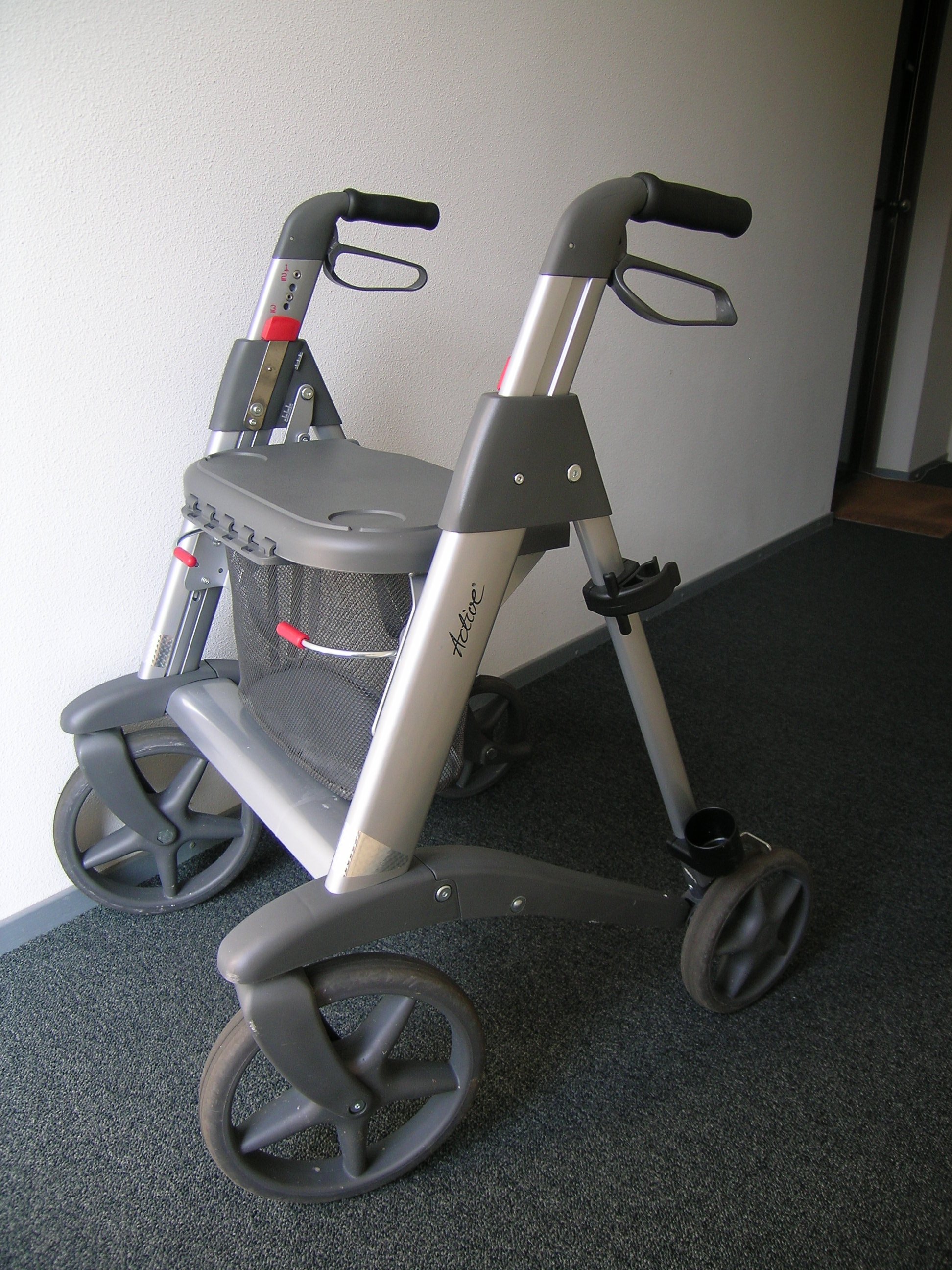
A rollator's seat can look like the obvious advantage when a parent gets tired halfway through an outing. A basic walker can look reassuring when balance is the main concern. Choosing between them starts with a more specific question: what does your parent need the device to do while they take each step?
This walker vs rollator comparison explains the main types, then helps you prepare for a fitting and supervised trial. It is a decision guide for families, not an individual prescription. If your parent has postoperative restrictions or needs help taking weight off a leg, have their rehabilitation team approve the exact device before buying or switching.
The Short Answer
A standard walker has four legs without wheels. A two-wheel walker has front wheels and rear tips or other prescribed contact attachments. A rollator usually means a frame with four wheels, hand brakes, and often a seat. Retailers sometimes call all three “walkers,” so check the wheel arrangement rather than the product name.
The American Family Physician review of mobility devices explains that walkers can support people with poor balance or leg weakness. Four-wheel rollators move more freely but are less stable; they suit selected people who need walking support and rest breaks without needing to substantially unload a leg.
For your family, the first decision is therefore about support and control. A seat, storage bag, or attractive folding frame comes later. Ask a physical therapist to describe why a particular type fits your parent's walking pattern.
Compare the Three Common Types
| Question | Standard walker | Two-wheel walker | Four-wheel rollator | | --- | --- | --- | --- | | How does it advance? | Lift and place the frame | Move front wheels forward; rear contacts provide friction | Roll forward and steer with hand controls | | Main tradeoff | More stable base, but repeated lifting interrupts walking | Less lifting, with more resistance than a freely rolling frame | Smoother movement, with greater demands on speed and brake control | | Typical rest arrangement | A separate chair | A separate chair | Many models have a resting seat | | What deserves a trial? | Ability to lift and position the frame | Turning and managing rear contact points | Stopping, parking, turning, and using the seat | | What must be checked? | Height, tips, folding locks | Those checks plus wheels and approved rear attachments | Height, wheels, brakes, folding locks, and seat fit |
These are broad distinctions. The AAFP comparison of geriatric assistive devices identifies the standard walker as the most stable walker type, while noting that lifting it can challenge someone with limited upper-body strength. A two-wheel frame offers a different compromise between stability and movement. Neither wheels nor the absence of wheels determines suitability on its own.
Start With the Reason for Support
Before the appointment, write down the task that has become difficult. “Needs a walker” gives the therapist less information than “holds the kitchen counter while turning toward the table” or “walks comfortably to the mailbox but cannot manage the return without sitting.”
Useful observations include:
- Where your parent first reaches for support during a familiar route.
- Whether the difficulty involves starting, straight walking, turning, or stopping.
- Whether fatigue appears immediately or after a particular distance.
- Whether a recent discharge plan specifies a device or weight-bearing restriction.
- Which hand, wrist, or shoulder symptoms make the current aid difficult to manage.
Bring the current device if there is one. Ask the therapist to distinguish a fitting problem from a device-selection problem. A frame that is poorly adjusted, damaged, or used without instruction does not provide a fair comparison with a new rollator.
For a walker assessment, our walker selection guide can help you organize questions. If the therapist recommends a rollator trial, use the rollator selection guide to record model details.
When a Standard or Two-Wheel Walker Deserves Discussion
Ask about a standard or two-wheel walker when your parent needs a more controlled frame around them, especially if rehabilitation instructions require support through both arms. The treating team must decide whether the chosen aid can meet any prescribed weight-bearing limits.
Consider a parent returning home after an operation. The family may see a seated rollator and imagine easier trips down the hallway. Before substituting it for the discharge device, ask the therapist to explain the original recommendation. A seat does not address the same need as support during each step.
A standard frame also creates a practical question: can your parent advance it repeatedly without an exhausting lifting task? For a two-wheel version, ask the supplier which rear tips or attachments are intended for that model and flooring. Avoid changing attachments simply because an online demonstration makes the frame look easier to move.
Write the exact recommended type on the shopping list. Include the fitted height range, required accessories, and any restrictions. This helps relatives avoid ordering a different wheel arrangement under a similar product title.
When a Rollator Deserves Discussion
A rollator may be worth assessing when the main goal is a manageable walking rhythm with opportunities to sit during outings. The seat matters only if your parent can also control the device while walking and complete the stopping-and-sitting sequence safely.
Think about the whole destination. A library visit might involve an entrance door, a turn around a display, a queue, and a place to rest. Ask the therapist which parts are suitable for a supervised trial. Success along a straight shop aisle leaves these other tasks unresolved.
Hand comfort deserves particular attention. Have your parent try the actual brake levers rather than having a relative squeeze them on their behalf. Ask them to demonstrate slowing, stopping, setting the parking locks, and releasing them. Record whether difficulty comes from reach, grip, pain, or remembering the sequence.
Forgetting a control or losing the frame during a turn is useful feedback for the clinician. Avoid treating repeated family reminders as proof that the device is independently manageable. Ask what assistance would be needed and whether another design would better fit the person.
Treat the Seat as a Separate Task
A rollator's walking fit and sitting fit both need assessment. Ask your parent how the seat feels, and have the therapist observe the approach, turn, lowering movement, and return to standing. Confirm that the model's seat dimensions and capacity meet the user's needs.
Read the manual for that exact model. For example, Medline's rollator instructions require locked brakes before sitting and prohibit sitting on sloped or uneven ground. They also prohibit using that rollator as a wheelchair or moving it with someone seated. Those restrictions illustrate why a walking aid with a seat should never be assumed to provide passenger transport.
If your parent needs to be pushed for part of an outing, ask the care team about equipment designed for that purpose. Keep that question separate from whether a resting seat would be convenient. Any convertible device needs its own assessment and instructions.
At a trial, identify where a rest would actually happen. A narrow entrance or crowded checkout area may leave little room for the seating maneuver. Make the stopping location part of the plan instead of relying on finding space after your parent becomes tired.
Check Fit Before Comparing Comfort
The AAFP patient guide to canes and walkers describes wrist-level handles, with the arms relaxed at the sides, as a fitting starting point. A clinician should then observe walking and make any necessary adjustments.
Bring everyday footwear to the appointment. Ask the fitter to record the final settings and show you how to recognize a loose adjustment or incompletely engaged lock. If two relatives share responsibility for transporting the device, both should understand how it returns to its fitted position after folding.
Compare models within the approved category. Note which handles feel comfortable, which frame allows the prescribed walking position, and which controls your parent can operate. A lighter frame that does not fit is a poor solution to a lifting problem.
Do not use a manufacturer's user-height range as the only fitting measure. Have the supplier confirm that the actual handle adjustment, frame dimensions, and any seat work for your parent. Ask what can be exchanged if the home trial reveals a mismatch.
Measure the Home Route
Choose one important journey, such as the bed-to-bathroom route. Measure the narrowest usable doorway and the space where the device must turn. Include furniture, the door's swing, projecting brake handles, and the position of any basket.
A frame can pass through an opening yet leave too little space for the next movement. Sketch the route and bring measurements to the supplier. Ask whether a home assessment is available if the difficult area cannot be meaningfully reproduced elsewhere.
Use a short trial record:
- Device model and overall width.
- Doorway clearance with the door in its normal position.
- Space needed to turn beside the toilet or bed.
- Any catching point at a threshold or furniture corner.
- Assistance recommended for that particular route.
A rollator's seat may take up space that a simpler walker leaves open. Conversely, a no-wheel frame may add lifting work on a frequently repeated route. Ask your parent and therapist to assess the actual task before deciding which tradeoff matters more.
Plan Outdoor Use and Car Transport
Make a list of the surfaces between home and a regular destination: paving, a sloped driveway, a curb, or a gravel parking area. Share that list before buying. The NHS walking-aid guide recommends considering indoor or outdoor use, the ability to lift a frame, and the need for a resting seat when choosing equipment.
Ask the supplier to explain the model's permitted surfaces and obstacles. Larger wheels or an “outdoor” label do not settle whether your parent can manage the route. Arrange any challenging practice with the professional support recommended for them.
Test transport with the person who usually drives. Can they fold and lift the device into the actual vehicle? Does it fit alongside the other items that must travel? Who returns it to your parent at the destination?
Write down the handover sequence. A device stored securely in the trunk is useful only if it becomes available when your parent needs it. If lifting is difficult for the caregiver, ask about a different approved model or a transport arrangement before purchase.
Compare Ownership Costs and Maintenance
Request an itemized quote for the chosen model, fitting, delivery, and necessary accessories. Ask about replacement tips, wheels, brake servicing, and the return policy. Check any coverage directly with the relevant insurer or equipment provider before ordering; a clinician's recommendation does not establish what a particular plan will pay.
For a borrowed or secondhand device, ask the supplier to inspect it and identify compatible replacement parts. Missing manuals, worn components, or an unknown model number make it harder to establish how it should be used and maintained.
MedlinePlus walker guidance recommends daily checks of tips and wheels, replacing worn parts, and keeping walking surfaces clear and dry. It also advises using chair armrests or handrails rather than pulling on the walker to stand, and obtaining physical-therapy instruction before attempting stairs with a walker.
For your household, assign someone to handle servicing and keep the manual where they can find it. Ask the supplier which problems require taking the device out of use and whom to contact. A practical maintenance plan includes access to an alternative if a repair is needed.
Leave the Trial With a Specific Decision
Before paying, ask your parent to complete the tasks approved for the trial: starting from a chair, walking, turning, stopping, and returning to a seat. For a rollator, include the parking-brake and resting-seat routine. Ask the clinician what help, if any, is required.
Record three answers: the exact device recommended, the activities it is intended for, and the problems that should trigger reassessment. Include a contact for follow-up if home use reveals something the trial missed.
Your parent may value a particular color, seat style, or folding mechanism. Include those preferences among models that meet the assessment. The useful choice is the one that supports their ordinary journeys and has a workable routine for fitting, practice, transport, and maintenance.
Featured image: Rollator by DirkvdM, licensed under CC BY 3.0. Original image downloaded without modification.