
compare
Hearing Aids vs TV Listening Devices
Readers comparing Hearing Aids vs TV Listening Devices need clearer tradeoffs, not generic feature lists.
A television turned up loud enough to disturb everyone else can make a hearing problem feel like a shopping problem. Before choosing between hearing aids and a TV listening device, ask where your parent struggles: only during television, or during conversations, phone calls, and everyday activities too?
Hearing aids address hearing loss across daily listening situations. A TV listening device delivers television audio closer to the listener, often with a separate volume control. Some families benefit from both. The practical goal is understandable dialogue at a comfortable level, with equipment your parent can operate and a clear plan for difficulties beyond the screen.
The comparison at a glance
- Main job: Hearing aids support hearing across daily activities. TV listening devices deliver sound from a connected television.
- Listening settings: Hearing aids can support conversation and other environments, depending on fitting and hearing needs. TV systems primarily serve the television or another supported source.
- Personal adjustment: Hearing aids offer prescription fitting or supported OTC customization. TV receivers usually offer volume and sometimes tone or balance controls.
- Television connection: Hearing aids may need a compatible streamer. A TV receiver usually needs a transmitter, cable, or supported wireless connection.
- Daily tasks: Hearing aids require insertion, cleaning, and charging or batteries. TV receivers require wearing, charging, and the correct television output.
- Family viewing: Separate listening levels depend on the television and accessory configuration. Confirm that speaker output can stay active.
- Main purchase risk: Hearing aids may be a poor match for hearing needs or handling ability. TV systems may have incompatible connections, uncomfortable fit, or audio delay.
These are category differences, not promises about every product. Read the manual for the exact model before purchasing. Our buying framework below is a practical household assessment, not a clinical test or a ranking based on hands-on product trials.
Start with hearing needs beyond television
Ask your parent to describe three recent listening situations. Could they follow a conversation across the dinner table? Did they understand a phone caller? Was television difficult even with captions? Record their answers without treating the exercise as a test they can pass or fail.
If difficulties extend beyond television, arrange a hearing assessment rather than relying on a TV accessory as the whole solution. Bring examples of missed speech and any existing hearing devices. A listening headset cannot assess the cause or degree of hearing loss.
In the United States, OTC hearing aids are intended for adults 18 and older with perceived mild to moderate hearing loss. They do not require a prescription. Someone who cannot hear speech in a quiet room or has substantial difficulty hearing loud sounds should seek professional guidance rather than assuming an OTC device will be sufficient. Ear pain, drainage, dizziness, or hearing that differs between ears also warrant medical evaluation. FDA guidance on OTC hearing aids.
A sudden loss of hearing, including a change noticed on waking or over a few days, needs immediate medical attention. Do not wait for a device delivery or assume that wax explains it. NIDCD guidance on sudden deafness.
What hearing aids contribute
Hearing aids are wearable devices that amplify and process sound for the person using them. Prescription devices can be programmed by a hearing professional for the wearer's hearing needs. They do not restore normal hearing, and adjustment and practice may be necessary. Size and style also affect how easy they are to insert and handle. NIDCD hearing aid overview.
For a family comparing purchases, the useful question is whether your parent wants support that follows them through the day. A television-only receiver stays tied to its audio source. Hearing aids may also be relevant when your parent speaks with a visitor or moves to another room.
Ask the provider or manufacturer to explain television options before buying. Identify the exact hearing aid model, its supported accessories, and whether an additional transmitter is required. A wireless label alone does not establish compatibility with your television.
If your parent already wears hearing aids, bring the television problem to their hearing professional. Describe whether dialogue is unclear, background music dominates, or the volume is uncomfortable. Discuss fitting and streaming options before replacing an otherwise useful pair solely because one program is hard to follow.
What a TV listening device contributes
TV listening systems typically move audio from the television to a personal receiver, headset, or compatible hearing device. The NIDCD describes assistive listening technologies that can work with or without hearing aids; a television can also feed a hearing loop for a compatible receiver or telecoil. NIDCD assistive device overview.
For shopping purposes, distinguish three arrangements. A dedicated headset plays TV sound through its own earphones. A hearing aid accessory sends television audio into compatible hearing aids. A nearby personal speaker puts sound closer to the chair. These arrangements create different comfort, installation, and conversation tradeoffs.
A dedicated receiver may be worth considering when your parent mainly wants more manageable television sound. However, confirm that its controls are useful to them. A small tone button is of little value if they cannot identify it or remember which setting they prefer.
A personal speaker may appeal to someone who dislikes earphones, but it still produces sound in the room. Try it from the actual seating position and ask other household members whether the result works for shared viewing.
Match the equipment to the television
Before ordering anything, photograph the TV model label and its audio connections. Also list the cable box, streaming device, and soundbar. A system that works with one input may require different settings when your parent switches to another source.
Use this installation checklist with the seller:
- Which output does the transmitter require: optical, headphone, another wired connection, or a supported wireless method?
- Is the needed cable included, and can it reach without crossing a walkway?
- Does connecting the receiver mute the television speakers?
- Can speaker and personal receiver volumes be controlled separately?
- Does the transmitter require a particular audio format in the TV settings?
- Will the setup work with the family's soundbar and usual streaming apps?
Ask for answers that refer to the exact model combination. Keep the written instructions with the purchase receipt. If the seller cannot confirm the configuration, choose a return policy that allows you to test it at home before committing.
During setup, check lip synchronization using ordinary conversation on screen. Noticeable audio delay can make the experience frustrating even when sound is louder. If sound comes through both speakers and a receiver, check whether your parent hears an echo. Follow the manufacturer's troubleshooting steps rather than adding adapters without a clear explanation of what they solve.
Comfort and controls determine daily use
Have your parent try the intended wearing arrangement while sitting in their usual chair. Consider glasses, the chair's headrest, and existing hearing aids. A headset that seems comfortable for two minutes may feel different during an evening program.
Do not assume earphones should be placed over hearing aids. Ask the hearing professional or device manufacturer about the proposed combination, including comfort and possible feedback. If the system streams directly into hearing aids, ask how your parent can pause TV sound and return to conversation.
Look for controls your parent can locate by touch and operate without excessive force. Ask them to demonstrate turning the receiver on, adjusting it, and placing it on the charger. This reveals more than a caregiver demonstrating the process while the parent watches.
For someone who needs reminders, simplify the routine to a consistent receiver location and clearly labeled charging station. Avoid buying several similar remotes at once. If a caregiver must pair the device every evening, include that recurring task in the decision.
Compare the complete purchase, not just the device
Request a written total for each realistic arrangement. For hearing aids, ask what fitting, follow-up adjustments, repairs, supplies, and television accessories are included. For a TV system, include transmitters, cables, adapters, replacement ear cushions, and any paid installation.
There is no universal price relationship that settles this comparison. A simple TV receiver and a complete hearing aid service package solve different problems. Conversely, buying a separate TV system may be unnecessary if an existing hearing aid setup already supports a suitable accessory.
Read the return terms before checkout. Confirm the trial length, when it begins, what packaging must be kept, and any shipping or service charges. Schedule the home trial early enough to resolve connection problems before the return deadline.
Ask who will provide support after the sale. A local appointment, telephone troubleshooting, and an app-based help screen create different workloads. Choose a support route your parent or their regular helper can realistically use. Keep the model numbers and contact details in one place.
Use a short home trial with clear criteria
Choose two or three programs your parent actually watches, including one with dialogue and one with music or background sound. Keep the usual chair and viewing distance. Begin with captions available and a comfortable volume; do not keep raising the level to force a successful result.
Compare the current setup and the candidate arrangement across a few viewing sessions. For hearing aids, follow the fitting professional's adjustment guidance rather than treating one evening as a complete trial. For either option, record observations in plain language:
- Could your parent follow the conversation without repeatedly asking what was said?
- Was the listening level comfortable throughout the program?
- Could other people watch at their preferred speaker volume?
- Could your parent pause the audio and speak with someone nearby?
- Could they finish the session and charge or store the equipment themselves?
Use your parent's report as the main measure of listening benefit. A caregiver's impression that the room is quieter does not establish that dialogue is clearer. If the device only increases loudness while speech remains confusing, seek help with the setup or hearing needs instead of accepting the result as good enough.
Three examples of choosing a next step
Television is the main complaint. A parent follows ordinary conversation but struggles with dialogue in a favorite drama. First compare captions and the TV's dialogue settings, where available. If the problem persists, a returnable TV listening system may be a practical experiment. Continuing or worsening hearing difficulty still deserves assessment.
The difficulty appears throughout the day. A parent misses visitors' questions, phone conversations, and television dialogue. Prioritize a hearing assessment and discuss appropriate hearing support. A TV receiver may be useful later, but choosing one first does not address the wider communication problem.
Hearing aids help, but television remains tiring. A parent wears hearing aids comfortably yet keeps increasing TV volume. Check the current fitting and ask about compatible television accessories. Compare that route with a dedicated receiver only after confirming how each arrangement affects comfort, conversation, and shared viewing.
These examples organize the shopping decision. They cannot establish the cause or severity of someone's hearing difficulty.
Keep shared viewing workable
Discuss how your parent prefers to watch with others. Some people want private audio; others want to hear family comments during the show. Ask whether the proposed system allows an easy transition between television and room conversation, and demonstrate that transition during the trial.
Do not assume a person wearing a receiver will notice someone calling from another room. Agree on a simple way to get their attention, such as approaching within view. Keep charging cords away from walking routes and make sure the receiver can be removed easily when your parent gets up.
Captions can remain part of the setup with either option. Check their size and placement on the programs your parent uses. A combination of readable captions, workable audio, and simple controls may be more useful than repeatedly switching products in search of one perfect feature.
Questions families often ask
Can a TV listening device replace hearing aids?
It can provide television audio, but it does not provide the same support across daily listening situations. If your parent also struggles away from the screen, include those difficulties in a hearing assessment. A successful TV trial does not resolve that broader question.
Can someone use both?
Possibly. Compatibility depends on the hearing aids, TV system, and connection method. Ask about a supported streamer or telecoil arrangement, where relevant, and verify it before buying. Bring exact model names rather than relying on a general wireless compatibility claim.
Which option is easier for an older parent?
The easier option is the one they can operate consistently. Test insertion or wearing comfort, the volume control, charging, and switching back to conversation. Include eyesight, hand function, memory, and available help in the choice.
What should we do if neither improves understanding?
Keep notes about which voices and programs are difficult, the settings used, and whether the sound is clear or merely louder. Take those observations to a hearing professional and, for connection problems, the manufacturer. They make troubleshooting more specific than saying the product did not work.
Before purchasing, complete this sentence together: “We want help with ___, and we will know it works when ___.” That answer should guide whether to pursue hearing aids, a television accessory, or a combination.
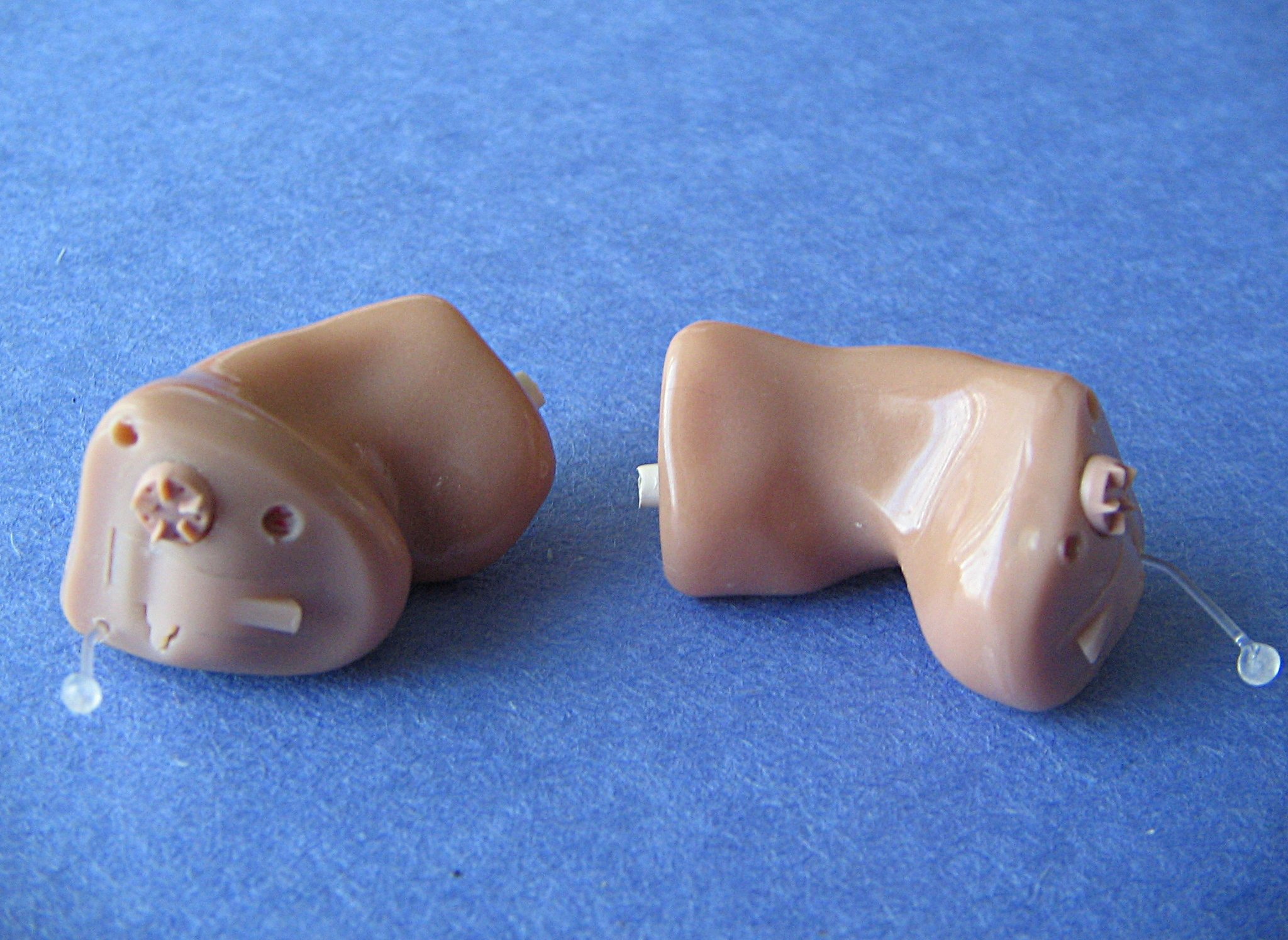
Featured image: “Hearing aids” by Kurt Nordstrom, via Wikimedia Commons, licensed under CC BY 2.0. Downloaded without alteration.