
best
Best Motion Sensor Lights
Families comparing Motion Sensor Lights need a tighter shortlist, simpler criteria, and buying guidance rooted in real home use.
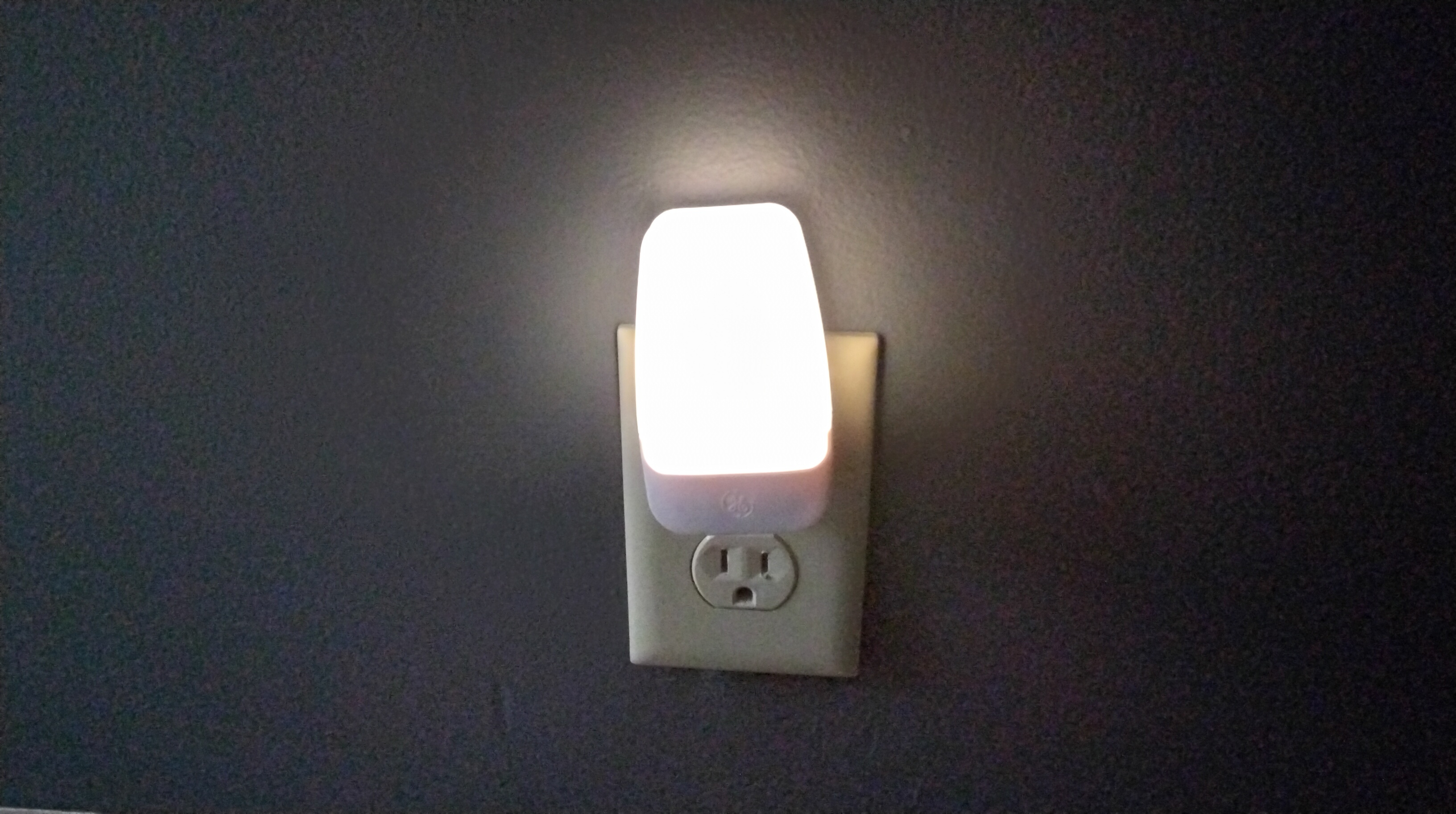
The best motion sensor lights for a nighttime bathroom route switch on before the first unlit step, reveal the next doorway or obstacle, and remain useful during pauses. For caregivers, those three checks matter more than buying the model with the longest advertised detection range. Start with one light in the most difficult location, test the complete trip, and expand only after the placement works.
Our shortlist covers a simple plug-in, a dimmable plug-in, and a battery-powered path light. These are research-based buying candidates, not products we have tested or a ranking of proven fall-prevention performance. Specifications, advertised prices, and stock messages below were checked on September 7, 2026. Prices are in US dollars and may change before checkout.
Quick comparison: three candidates for different rooms
| Product and model | Best reason to compare it | Published sensor range | Advertised price | Main limitation to investigate | | --- | --- | --- | --- | --- | | GE UltraBrite, bronze, 26140 | Simple plug-in route lighting | Up to 25 feet | $13.99 | Outlet placement determines the viewing angle | | GE Motion Sensing Dimmable, 67551 | Adjustable output near sleeping areas | Up to 20 feet | $12.99 | Listed out of stock when checked | | Energizer Motion Activated Path Light, 38183 | Lighting a location without a useful outlet | 15 feet | $18.99 | Batteries need an assigned maintenance routine |
The figures come from Jasco's listings for the GE UltraBrite 26140, GE dimmable 67551, and Energizer 38183. These three products share a supplier; this is a focused comparison of documented options, not an exhaustive market survey.
Treat each stated range as a manufacturer claim to verify in your room. The practical question is whether the light responds from the direction your parent actually approaches. A successful demonstration while waving at a sensor does not establish that it will respond at the bedroom doorway or illuminate a turn farther down the hall.
Best simple plug-in candidate: GE UltraBrite 26140
Jasco lists the bronze 26140 with 40-lumen output, activation in low-light conditions, and a 90-second automatic shutoff. It plugs directly into an outlet and is described as leaving the other receptacle available. The page showed it in stock during our review. Check the 26140 product listing for the exact version being sold.
Consider this candidate where an existing wall outlet has an unobstructed view of the approach. Its appeal is a straightforward installation with no routine battery charging. Before ordering, take a photograph of the outlet with nearby furniture in place. Include the bedspread, open door, laundry basket, or walking aid that normally occupies the area.
The buying tradeoff is location. A convenient socket behind a dresser may be a poor location for route lighting. If you would need an extension lead to make the placement work, compare a battery-powered alternative or another suitable lighting arrangement instead. Avoid designing the walking route around a cord.
For a family comparing several plug-in models, this is a useful baseline: a documented light output and timeout, without relying on a phone application. Keep the packaging until you have checked both travel directions in normal nighttime conditions. If the output feels uncomfortable or leaves the important part of the floor dark, a different position or adjustable model deserves consideration.
Best adjustable plug-in candidate: GE 67551
The GE 67551 listing specifies a dimming wheel with output up to 60 lumens, activation when the room is dark, and shutoff 90 seconds after motion ends. Jasco describes an offset plug and a louvered shade. The brushed-nickel version was marked out of stock when checked, so it is a comparison candidate rather than a confirmed immediate purchase. See the GE dimmable product page.
An adjustable model is worth considering when the same fixed output may be comfortable from the hallway but unpleasant from the bed. Test the setting from the person's usual resting position and from the point where they enter the route. Ask them to describe what they can see, rather than asking only whether the light is “bright enough.”
Do not assume maximum output is the right setting. The goal of the trial is to find a usable view of the floor and doorway without a distracting bright patch. If changing the setting makes one location usable but another difficult, the room may need a second source or a different arrangement.
If this model remains unavailable, use its features as a shopping checklist. Look for documented adjustable output, the actual timeout, and accessible controls. Avoid substituting another GE-branded night light on appearance alone: motion sensing and dusk-to-dawn operation are different functions, even when the housings look similar.
Best outlet-free candidate: Energizer 38183
The Energizer 38183 uses three AAA batteries and includes a metal bracket with magnetic mounting. Jasco lists motion, always-on, and off settings, with the switch inside the battery compartment. Its page showed stock available. The listing does not specify a lumen rating or automatic-off duration, so ask the supplier for the current instructions before a timing-sensitive purchase. See the Energizer path light details.
This candidate addresses a common layout problem: the place that needs light is several feet from the nearest useful socket. A battery unit lets you investigate a location based on the route rather than the wiring. Choose a mounting position that follows the instructions and does not put the unit where a foot, walker, or cleaning tool regularly passes.
The tradeoff is upkeep. Decide who will check operation and replace batteries, and make sure that person can reach the installed unit comfortably. A location that requires awkward bending or climbing may make routine maintenance less likely. Ask about the battery compartment before buying for someone with limited hand strength.
Because the mode switch is internal, establish the desired setting during setup and record it for other helpers. If you need frequent changes between motion and continuous lighting, compare how convenient those changes would be in the installed position. Do not interpret an always-on option as evidence of long runtime; ask for runtime information under the mode you expect to use.
How we narrowed the comparison
We favored products with identifiable model numbers, manufacturer or brand-supplier documentation, and functions that address ordinary indoor routes. The shortlist deliberately spans power and brightness choices. We did not use customer star ratings to declare a safety winner, and we have not measured sensor reliability, illumination at floor level, or battery life.
This distinction matters when shopping pages use broad phrases such as “safe navigation” or “sleep friendly.” Those phrases do not show how a particular unit performs in your parent's bedroom. A product may meet its advertised specifications while still activating too late for the chosen location. Keep your room observations separate from the marketing description.
For the wider safety context, the National Institute on Aging recommends good hallway and stair lighting, switches at useful locations, and night lights near the bed. It also suggests motion-activated plug-in lights for pathways and stairwells. Those recommendations support improving the lighting plan; they do not endorse the commercial models in this guide. Read the NIA room-by-room falls prevention guidance.
Choose the operating behavior before the brand
A dusk-to-dawn light responds to darkness and can provide a continuous nighttime reference. A motion light responds to movement; many models also require the surrounding area to be dark. Read the exact operating description. A listing containing both “light sensing” and “motion sensing” does not necessarily offer a choice between continuous and motion-only modes.
Write down what you want at each location. At the bed, you may want the floor visible before standing. Along a short corridor, you may want extra light as someone approaches. Inside the bathroom, you may want lighting that remains available during a period of little movement. One operating behavior may not serve all three needs.
Consider a steady background light where waiting for motion activation would be inconvenient or confusing. The family can then evaluate motion lighting as additional illumination. That is a planning option, not a requirement to install multiple products everywhere. Keep the arrangement understandable for the person who uses it and for anyone helping overnight.
The NIA's home-safety guidance for Alzheimer's caregiving includes nightlights or automatic light sensors. If changing illumination seems to upset or disorient your parent, discuss the response with their care team and consider a more predictable arrangement. A sensor light does not establish that someone can safely walk unassisted. See NIA Alzheimer's home safety tips.
Test the first step, the turn, and the return trip
Make a simple route sketch with three marked locations: where the person starts, where they change direction, and where they arrive. Add doors in their normal nighttime positions. Mark the actual light and sensor positions separately if the product uses separate components. This is more useful than measuring the hallway length alone.
First, have an able helper check the arrangement while the usual room lighting remains available as backup. Do not ask someone at risk of falling to explore a dark route to test a product. Keep their normal assistance in place during any later observation of how they use the lighting.
At the starting location, check whether the floor is visible before a foot needs to move into an unlit area. At the turn, check whether the next section becomes visible soon enough. On the way back, repeat the observations from the opposite direction. An arrangement that works leaving the bedroom can still fail when returning from the bathroom.
Test with the furnishings that will actually be present. A robe hung on a door or a walking aid parked beside the bed can change the layout. Do not rely on a trial conducted with every door fully open if doors are usually partly closed overnight. Record the position that worked so a later cleaning session does not accidentally undo it.
Use a short observation note: “light came on before doorway,” “dark patch beside chair,” or “return approach did not activate.” These descriptions help you decide whether to move one unit, add coverage, or choose a different mode. They also give a supplier something more specific to investigate than “the sensor is bad.”
Check what happens when someone pauses
A motion light can perform well during walking and still be inconvenient when a person stops. Check the published automatic-off interval, whether movement restarts the interval, and whether a continuous mode is available. If the supplier does not publish those details, ask before buying a multipack intended for the entire route.
During a safe trial, an able helper can remain still at a location where the user is likely to pause and observe the timeout. Keep another usable light available. Check whether the remaining illumination still serves the task after the motion light goes off. Do not build a routine that requires someone to wave, lean, or step simply to restore necessary visibility.
A bathroom deserves its own decision. The illumination needed while approaching the doorway may differ from what is needed while seated, washing, or returning to the hall. A motion-only night light can supplement the room's lighting, but its timer should not determine how long someone can comfortably remain there.
If the product's behavior is unsuitable, changing the purchasing requirement may be more effective than repeatedly repositioning it. A longer timeout, continuous nighttime mode, or accessible ordinary switch may answer the problem. Keep the distinction clear between “the sensor did not detect the approach” and “the light went off during stillness”; those are different failures to investigate.
Judge visibility from the user's position
Lumen output helps compare documented products, but it does not describe exactly what the person will see at a particular spot. During the trial, look at the floor beside furniture, the doorway, and any change in level. A bright source near an outlet is not the same thing as useful coverage of those locations.
Ask your parent where the light feels distracting. Try to understand whether the problem is looking toward the source, reflections on a surface, or an area beyond the illuminated patch that remains difficult to see. Adjust placement or output within the instructions, then repeat the same observation. Change one thing at a time so you know which adjustment helped.
Keep normal task lighting available. A small path light should not become the sole basis for reading labels, identifying items, or negotiating a staircase. The NIA recommends good stair lighting with switches at both ends; preserve that broader arrangement when adding automatic lights. See the NIA home lighting recommendations.
For someone whose vision makes the route difficult even after sensible adjustments, an occupational therapist or vision professional can help assess the environment. Bring photographs and the observations from your trial. Buying a brighter multipack without understanding the remaining difficulty may leave the same problem in place.
Compare the cost of a working route
Price the number of useful locations, not simply the number of lights in a box. A cheap multipack is poor value if every sensor has the wrong operating behavior for the room. Start by confirming one unit works, then decide whether matching units make sense elsewhere. Different parts of the route may need different solutions.
As a shopping example, two units advertised at $13.99 would total $27.98 before shipping and tax. That arithmetic does not mean two units will cover your hallway. Add mounting supplies only if the instructions require them, and include batteries when they are not supplied. For rechargeable alternatives, check whether the necessary charging equipment is included.
Compare return terms and the exact seller before ordering. Save the model number and a copy of the listing so you can check what arrived. Color variants, pack sizes, and similarly named products can have different specifications. Ask whether you can return an opened unit after an indoor trial and whether return shipping changes the economics of the purchase.
If a relative orders the equipment, send the room requirements along with the link. “Battery power, documented timeout, and a mount we can reach” gives them a reason to reject an unsuitable substitute. A product name alone may lead to a last-minute replacement that looks right but behaves differently.
Installation and upkeep that the household can sustain
Follow the product's instructions for mounting, power, and permitted locations. Check the voltage and plug requirements for the country where it will be used. A product marketed for a bathroom is not automatically suitable wherever water may reach it; verify the location restrictions for the exact model rather than inferring them from a room photograph.
Keep lights and any cables out of the walking space. Before fixing a battery unit in place, check how it detaches for service and whether the mount suits the surface. If installation would involve new electrical wiring or an uncertain outlet condition, use a qualified electrician. A small purchase should not depend on improvised electrical work.
Assign one person to check that the route still works after installation, after battery replacement, and after furniture is moved. Add a regular functional check to a household routine that already happens. The interval can reflect use and the manufacturer's guidance; do not assume a battery-life claim removes the need to observe actual performance.
For outages, the NIA recommends keeping a flashlight beside the bed. Ordinary plug-in lights should not be assumed to provide backup power. Keep that separate backup reachable and check it too. A battery motion light may remain available without mains electricity, but only if its batteries and placement are still adequate. See NIA bedroom safety guidance.
Questions to settle before ordering
Do we need a smart-home system?
Choose one only if a specific function justifies its setup and maintenance. For example, coordinating existing compatible room lighting may be useful in a household that already manages it. Ask who will maintain the settings and what lighting remains available if the system stops working. A standalone candidate may be easier to evaluate when the requirement is simply lighting one doorway.
Can one sensor cover a corner?
Do not assume that the advertised distance answers this. Test the actual approach and the illumination beyond the turn. If the next area remains dark until someone enters it, revise the placement or provide another appropriate source. The aim is a visible route ahead, not merely proof that each light eventually activates.
What if the light comes on unnecessarily?
Record when it happens and what else is occurring nearby, including pets or people passing a doorway. Check the manufacturer's troubleshooting instructions and available settings. Repeated unwanted activation is a reason to reconsider the location or operating mode, especially if it disturbs the person sleeping. Avoid covering a sensor or modifying the housing unless the instructions explicitly permit it.
Which candidate should we try first?
Start with the simple plug-in where the outlet location works, the adjustable candidate where output control matters and stock is confirmed, or the battery option where placement needs more freedom. Order only after checking the missing specifications that affect your room. Keep the unit only if the first step, pause, and return-trip checks all support the intended use.
For a broader comparison of continuous, rechargeable, and other nighttime lighting types, read Best Night Lights for Seniors.
Image credit: Nightlight-1.jpg by ᐃᓄᒃᑎᑐᑦ, CC0 1.0. The photograph illustrates a wall night light and does not depict the shortlisted products.