
best
Best Shower Chairs
Families comparing Shower Chairs need a tighter shortlist, simpler criteria, and buying guidance rooted in real home use.
The best shower chairs for seniors are the ones that fit both the person and the bathroom. Start with how your parent enters the shower, sits down, washes, and gets out. A chair that makes washing less tiring can still be the wrong purchase if reaching it requires a difficult step over a tub wall.
Our shortlist includes the Drive Medical chair with removable padded arms, the Etac Swift, and the Vive Shower Chair. We also include the Drive Transfer Tub Bench for families whose main obstacle is getting into a bathtub. These are research-based options for different situations, not results from hands-on testing or a claim that one model prevents falls better than another.
Quick comparison: which option belongs on your shortlist?
| Product | Reason to consider it | Main purchase check | Price information | | --- | --- | --- | --- | | Drive Medical 12445KD-1 | Conventional chair with back and removable padded arms | Arm clearance and full leg footprint | Request current seller price | | Etac Swift | Modular stool/chair with optional supports | Exact configuration and standard versus Low version | Distributor quote needed | | Vive Shower Chair | Direct-purchase option with a published price | Selected variant and its matching specifications | $67.99 displayed September 11, 2026 | | Drive Transfer Tub Bench 12011KD-1 | Alternative when tub entry needs a seated approach | Space on both sides of the tub wall | Request current seller price |
Product links and specifications appear below. Prices can change, and the displayed Vive price excludes any checkout-dependent shipping or taxes. A quote is more useful than an invented price range when manufacturers do not publish a consumer price on the pages reviewed.
For a walk-in shower, first compare stationary chairs that fit completely within its usable floor area. For a bathtub, decide whether stepping across the wall is manageable before comparing chair features. When you cannot confidently describe a workable transfer, ask for an occupational or physical therapy assessment; MedlinePlus specifically recommends a referral when bathroom modifications are uncertain. MedlinePlus bathroom safety guidance.
How we selected these options
We reviewed manufacturer product pages and specifications, looking for identifiable models, useful support choices, and information families can verify before ordering. We used public health guidance for the broader bathroom setting. The category recommendations are our editorial interpretation of those features, not clinical endorsements of particular products.
We did not test wet-surface traction, compare long-term durability, measure comfort, or independently confirm load ratings. Manufacturer capacity figures should therefore be treated as specifications to check against the delivered product and its instructions. Review scores were not the basis for selection.
This guide also distinguishes a product's seat size from the space its legs occupy. Retail listings sometimes foreground the smaller measurement, which can make a chair appear suitable for a narrow tub before the family checks its base. Where a complete dimension was not established, we identify the missing purchase check instead of filling it with an estimate.
Drive Medical 12445KD-1: a conventional chair with removable arms
The Drive Medical Shower Chair with Back and Removable Padded Arms is worth comparing when you want a familiar chair shape. The manufacturer lists a 350-pound capacity, 18.5 inches between the arms, a 9.75-pound product weight, and height adjustment in one-inch increments. It has a draining seat and an aluminum frame. Drive Medical specifications.
Our reason for shortlisting it is the combination of a back and removable arms. Before ordering, confirm whether those arms suit the person's approach to the seat. The listed arm spacing is a useful exclusion check, but it does not establish the complete floor footprint.
Request the current manual and overall dimensions from the seller. Also verify the model number: similarly named Drive chairs can have different construction and measurements. We did not verify a consumer price for this model, so compare delivered quotes for the same item number.
Etac Swift: a modular option for changing support preferences
Etac's Swift range lets buyers choose a stool or add arm and back supports. The manufacturer describes tool-free assembly and telescopic height adjustment. This makes it a candidate when the family wants to discuss different configurations with an equipment supplier. Etac Swift product information.
Etac's brochure lists a standard seat-height range of 16.5–22.5 inches, a Low version at 13.5–16.5 inches, and a maximum user weight of 160 kilograms, shown as 352 pounds. It lists 17.75 inches between arm supports. Etac Swift brochure.
Our purchase advice is to get the exact configuration written into the quote. Confirm whether the back, arms, or pads are included, and request its footprint at the intended height. Modular support is valuable only if the delivered version matches the person's needs. We did not verify a direct consumer price; ask the distributor for the complete package cost.
Vive Shower Chair: an option with a visible direct price
Vive's Shower Chair page displayed a price of $67.99 and a removable-backrest selection when reviewed on September 11, 2026. The page describes a textured, draining seat measuring 15.75 by 13 inches. Vive Shower Chair product page.
That makes it a useful starting point for a family gathering actual prices. However, the listing presents multiple product images and configurations. Confirm the selected variant, included supports, load capacity, height range, and overall base measurements before paying; do not assume every image represents the same package.
Our recommendation is conditional on that verification. The smaller stated seat may appeal when space is limited, but seat width alone cannot show that the feet will fit inside your tub. Check the return conditions before opening or using the chair, particularly any hygiene-related exclusions. A clear price is helpful, but a correctly specified order matters more than a temporary discount.
Drive Transfer Tub Bench: an alternative when tub entry is the problem
A transfer bench deserves a separate comparison when a chair placed entirely inside the tub would still leave a difficult standing step. Drive's 12011KD-1 has a reversible layout, tool-free assembly, a listed 400-pound capacity, and height adjustment from 17.5 to 22.5 inches. Its listed seat width is 26 inches. Drive Transfer Tub Bench specifications.
The tradeoff is space: assess the room outside the tub as carefully as the tub itself. A toilet, sliding-door track, or narrow walkway may prevent a workable arrangement. Ask the supplier to confirm tub compatibility and complete base dimensions.
This is an alternative category, not an upgrade every shower-chair buyer needs. Have a therapist establish the transfer method if assistance is required. A wider seat and higher capacity do not establish that a person can use it independently. Obtain a current seller quote for the exact model.
Measure the bathroom before choosing a chair
Make a short measurement sheet and take it to the supplier. Include a photograph of the empty shower or tub, but do not rely on the photo for scale. Small differences in the bottom of a tub can matter even when its upper opening looks generous.
Record the usable floor width and depth where the chair's feet would land. Note curved edges, the drain, changes in slope, and any raised track. Then measure the opening through which the chair must pass. A chair can fit on the floor yet be awkward to bring through a partly opening glass door.
Next, record the movement space. Where will your parent stand or approach the seat? Where will their feet go while seated? Where can a helper stand without blocking the exit? Sketch the door swing and any fixed screen. Include the position of controls and the handheld shower holder, since a chair should not force a long reach just to turn the water off.
Ask for the manufacturer's base width and depth at the intended height. Legs that angle outward can occupy more room than the seat. If a retailer cannot supply those dimensions, request the manual or contact the manufacturer before treating the product as a fit.
Use paper or cardboard on the dry floor to visualize the footprint, then remove it. This is a planning aid, not a stability test or a surface to put beneath the chair. Leave enough space to assess the whole bathing routine instead of seeking the largest chair that barely fits.
Match the seat to the person
Bring a second set of notes about the person using the chair. Useful questions include whether they usually need arm support to rise, whether they can sit upright comfortably, and whether their feet reach the floor on their present seating. Avoid selecting height only from the person's standing height; the actual seated fit matters.
A family can explain preferences to a supplier, but should not improvise a transfer technique for someone with weakness, recent surgery, or movement restrictions. Take any discharge instructions to the appointment and ask which chair configurations are compatible with them. A shopping guide cannot determine an individual's safe seat height or assistance level.
Consider usable width between the arms as well as the molded seat width. Ask whether clothing, hip position, or the way the person approaches the seat changes the clearance required. Conversely, a very wide seat may make supports harder to reach. Bigger measurements are not automatically a better match.
The backrest question should reflect how the person actually sits while washing. A person may be comfortable upright for a short conversation yet become tired while shampooing. Describe that routine to the therapist or supplier. Armrests also need to be considered in relation to entry: a support that feels reassuring once seated can interfere with an approach from the side.
Check the labeled weight limit for the exact configuration delivered. Do not substitute a capacity from a similar-looking listing, and do not interpret unused capacity as permission for a second person to sit on the chair. If size or positioning requirements exceed this shortlist, ask for equipment designed for those requirements rather than trying to modify a standard chair.
Compare the complete cost, including a failed fit
For each candidate, write down the model, seller, included components, delivered price, and return restrictions. Put these on the same line so an inexpensive stool is not accidentally compared with a complete chair package. If a backrest is essential, its price belongs in the initial comparison.
Ask whether a showroom has a demonstration unit or whether a local equipment service can help confirm fit before purchase. This can be especially useful when online measurements conflict. Do not assume an opened bathroom product can be returned after a trial; get the seller's conditions in writing before deciding that ordering two sizes is a practical strategy.
Other costs may include a suitable handheld shower, replacement feet, or professional assessment. Keep those separate from the chair price so the family understands what each expense solves. Avoid buying a bundle simply because its accessories are discounted; first establish which components are useful in this bathroom.
Ask how replacement parts are identified. A low initial price becomes less attractive if the seller cannot tell you how to replace a worn foot or missing fastener. Save the receipt, model label, instructions, and supplier contact together. When relatives share purchasing duties, this prevents a later replacement from being ordered against the wrong model name.
Set up the bathing area around the seated position
Public health guidance treats seating as part of bathroom preparation. The National Institute on Aging's checklist includes grab bars, slip-resistant surfaces, a plastic shower stool, and a handheld shower head. Use those categories to review the room around the chosen seat. NIA home safety checklist.
For your own layout, identify a reachable place for soap, the shower head, and a towel. Imagine dropping the shampoo bottle: would someone feel compelled to lean down or stand suddenly to retrieve it? Reorganizing supplies before the first shower can reveal whether the planned chair position is practical.
Check how water will remain inside the bathing area, especially around a transfer bench. A curtain that no longer closes normally may require a different arrangement. Consider where the helper will place wet towels and how the route out will stay clear. MedlinePlus advises keeping the floor outside the bathing area dry and warns that towel racks cannot serve as grab bars. MedlinePlus bathroom safety.
Do not assume a chair's rubber feet and an existing bath mat are compatible. Ask the manufacturer which surfaces are suitable, and follow the chair instructions. A mat with raised sections or a loose edge should prompt a compatibility check rather than an attempt to level the chair with household objects.
Assemble and inspect before the first shower
Open the package while the receipt and return instructions are available. Match the model label to the order and check that all listed parts are present. Look for cracked plastic, damaged feet, bent components, or fasteners that will not engage as the manual describes. Photograph shipping damage before assembly if you need to contact the seller.
Follow the specific manual for leg settings and attachment points. Do not copy another model's setup instructions from a video. If an adjustment feature is unclear, have the supplier explain it before anyone uses the chair. Tool-free assembly still requires correct engagement of each connection.
Place the empty chair in its intended position and confirm that it sits as the manufacturer requires. If it rocks, stop and investigate the setup or floor compatibility. Do not disguise the problem with folded towels, blocks, or an improvised shorter leg. A configuration expressly allowed for one product does not establish that the same adjustment is safe on another.
Arrange any first seated trial with the assistance already recommended for the person. Start with the room dry and the water off; the purpose is to check reach, clearance, and comfort, not to push through a difficult transfer. If the trial exposes a problem, return to the supplier or therapist before attempting the full shower routine.
Keep the chair useful after purchase
Decide who will check the chair and who will clean it. In a shared household, assumptions can leave both jobs undone. Use the manufacturer's cleaning instructions, including any limits on chemicals or temperature, and make sure someone can access the underside and connections without having to rush.
Before use, look for a missing foot, a loose connection, a new crack, or a change in how the chair sits. Remove damaged equipment from use while arranging a proper replacement or approved repair. Do not rely on tape to restore a load-bearing part or combine pieces from unrelated chairs because they appear to fit.
Keep track of changes in the person's routine as well. A chair may be unchanged while bathing becomes more difficult. If a parent now needs help to remain seated or cannot manage the previous transfer, review the equipment and assistance plan. Buying a model with more accessories is not a substitute for understanding the new difficulty.
In a bathroom used by several people, agree where the chair is stored and who restores its correct setup. Repeatedly changing the height for different users creates another detail that must be checked. If moving and resetting the chair is becoming burdensome, discuss an arrangement that reduces those steps while keeping the bathroom accessible.
Questions families often ask
Is a shower stool enough?
It may belong on the shortlist when a back and arms are not required, but removing supports solely to fit a cramped shower can change the suitability of the equipment. Ask the supplier or therapist to consider the person and the space together. If the preferred chair does not fit, revisit the bathing arrangement rather than automatically dropping every support.
Should we choose a swivel seat?
First identify the movement you want rotation to help with. Then ask how that specific model locks, whether the user can operate it, and whether the surrounding space permits the movement. A swiveling seat introduces a different setup and transfer process; this guide has not evaluated a particular swivel model sufficiently to recommend one.
Can we use a household plastic chair temporarily?
Choose equipment intended for bathing, with instructions and a stated capacity for that use. The fact that a household chair tolerates water does not tell you how it performs on a shower floor or whether its shape suits the transfer. If appropriate equipment is unavailable, ask the care team about a temporary bathing plan.
What should we do before placing the order?
Confirm the exact model, full footprint, seat-height range, usable width, capacity, included supports, and return terms. Then describe the complete route into and out of the seat. If that route remains uncertain, obtain an assessment before ordering. The right purchase should resolve a specific problem in an understood bathing routine.
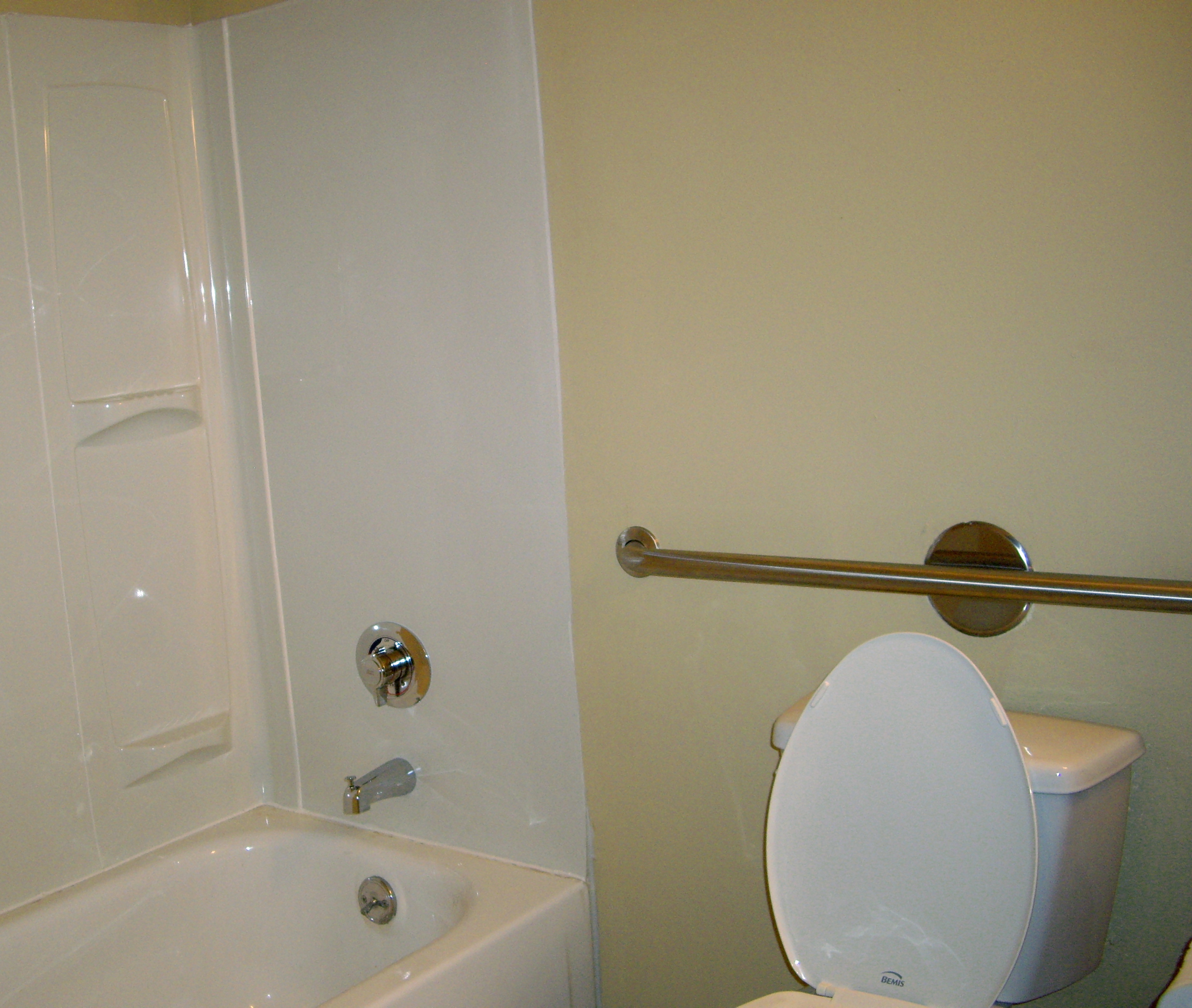
Featured image: “Grab bar” by Gramody, via Wikimedia Commons, licensed CC BY-SA 2.0. The Commons version includes cropping and color changes by McZusatz; no additional edits were made here. The photo illustrates a bathroom setting, not a shortlisted chair.