
best
Best Grab Bars
Families comparing Grab Bars need a tighter shortlist, simpler criteria, and buying guidance rooted in real home use.
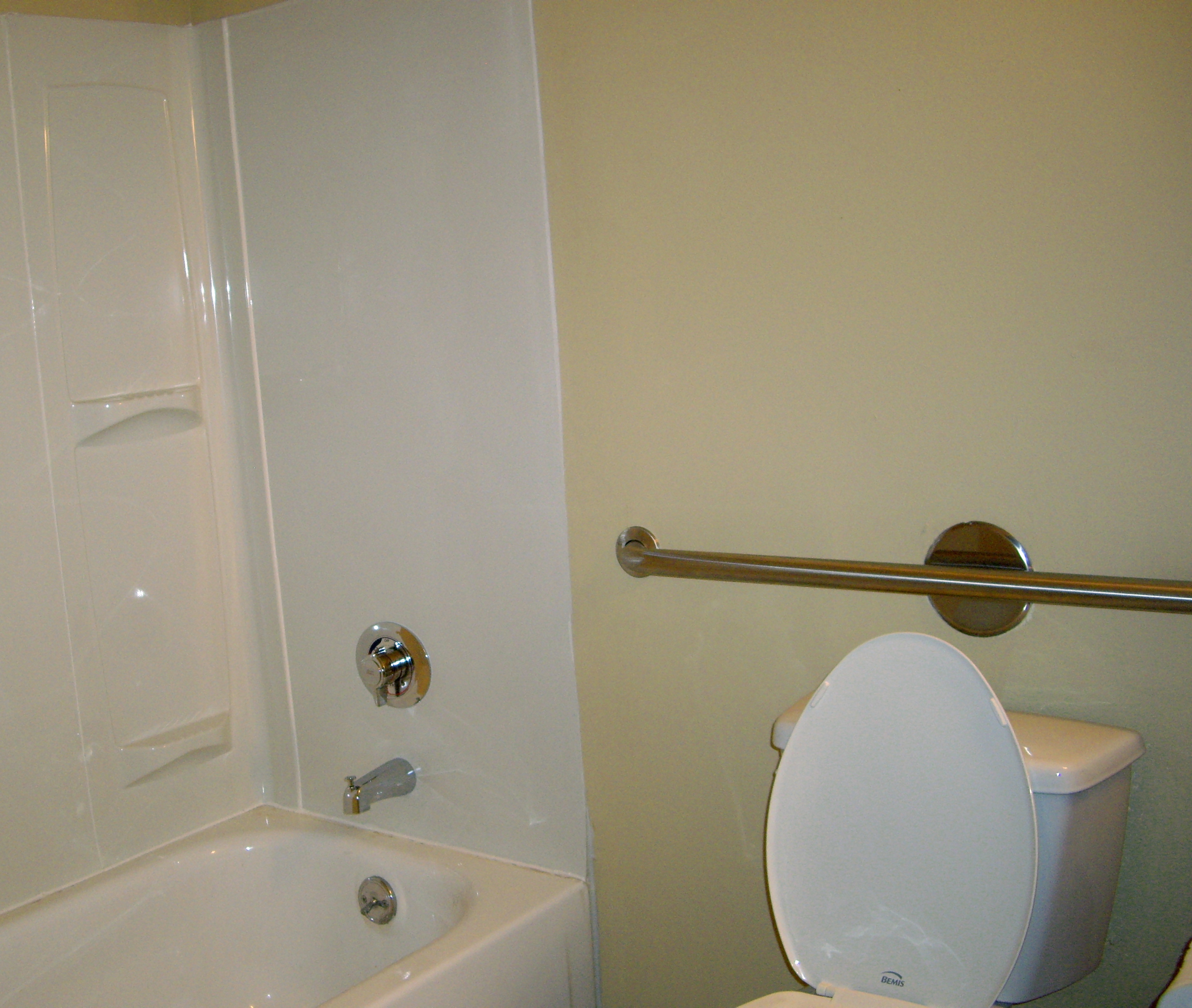
The best grab bar is not simply the model with the highest weight rating. It is the bar that gives an older adult a secure, comfortable handhold at the exact moment they need it—and that is anchored correctly to the structure behind the wall.
For most bathrooms, our first choice is a permanent stainless-steel bar with a textured grip, concealed screws, and mounting flanges that give the installer some flexibility. The **Moen Home Care 24-inch peened grab bar (LR8724P)** is the strongest all-around fit in that category. The lower-cost **Moen R8924** is a practical smooth-finish alternative, while the **Delta 41624-SS** is worth considering when a less clinical appearance will make the older adult more willing to use it.
Special situations need different hardware. The **Carex Tri-Grip bathtub rail** is a reasonable no-drill option for a compatible tub rim. The **HealthCraft SuperPole with SuperBar** offers transfer support when there is no useful wall. Neither replaces a permanent shower bar when a person may pull hard or try to catch a fall.
This shortlist is based on manufacturer specifications, mounting options, grip, materials, useful sizes, and suitability for common bathroom movements. We did not perform hands-on load testing, and a product's stated capacity applies only when it is installed exactly as directed.
Quick Picks
| Best for | Product | Why it stands out | Main tradeoff | | --- | --- | --- | --- | | Most bathrooms | Moen Home Care LR8724P, 24 inch | Peened grip, 1.25-inch diameter, stainless steel, flexible flange design | Permanent installation required | | Lower-cost permanent bar | Moen Home Care R8924, 24 inch | Widely available, ADA-compliant design, 500-pound stated capacity when properly mounted | Smooth surface is less grippy than peened steel | | Decorative bathroom | Delta Traditional 41624-SS, 24 inch | Multiple finishes, concealed mounting, retrievable wall anchor included | Much higher list price; smooth grip | | Long shower coverage | Moen 8996 L-shaped, 24 by 48 inch | Horizontal and vertical gripping zones in one bar | Large, visually prominent, demanding installation | | Tub entry without drilling | Carex Tri-Grip bathtub rail | Three hand heights and clamp-on installation | Only for compatible, structurally sound tub walls | | No usable side wall | HealthCraft SuperPole with SuperBar | Floor-to-ceiling support with a pivoting, locking bar | Ceiling compatibility and floor space must be checked |
Prices and availability change. Compare the exact model number, finish, included anchors, return policy, and installation cost rather than choosing from a product photo alone.
Best Overall: Moen Home Care LR8724P Peened Grab Bar
The 24-inch Moen LR8724P is our best general-purpose pick because its features match the conditions that matter in a wet bathroom. It is made from stainless steel, has a textured peened surface, measures 1.25 inches in diameter, uses concealed screws, and is offered with Moen's SecureMount flange design. Moen says the bar supports up to 500 pounds when correctly installed and complies with ADA specifications.
The 1.25-inch diameter is near the smaller end of the range allowed by ADA design standards. That can be easier to close a hand around than a 1.5-inch tube, particularly for someone with smaller hands. The texture is valuable for wet or soapy hands, yet it is built into the steel rather than added as a rubber sleeve that can trap residue.
SecureMount does not mean the bar can be screwed anywhere without planning. The flange provides multiple fastener points and can make it easier to catch a stud at an angle. Moen also sells hollow-wall anchors for certain approved wall assemblies, but the anchor, substrate, clear space behind the wall, and installation method all affect the final rating. Ask the installer to identify what each end is attached to.
Choose this bar for a vertical handhold at the shower entrance, an angled bar that follows a person's sit-to-stand movement, or a horizontal bar along a shower wall. Other lengths are available, so do not force a 24-inch model into a location where 16, 32, or 36 inches would better match the framing and the person's reach.
The main limitation is aesthetic. Peened stainless steel looks like safety equipment. If that appearance is likely to start an argument or discourage use, a decorative bar with adequate structure may be the better real-world choice.
Best Value: Moen Home Care R8924
The Moen R8924 offers the essentials at a comparatively modest retail price: 24-inch length, 1.5-inch stainless-steel tube, concealed screws, corrosion resistance, and a stated 500-pound capacity when correctly installed. It is marketed as ADA compliant and uses the SecureMount flange system.
At the time of this review, the 24-inch stainless version was listed at about $27 by a major home-improvement retailer. Treat that only as a snapshot; finishes, lengths, local stock, and promotions can change the actual cost. Installation may cost several times more than the bar, especially when tile drilling, wall investigation, or backing is required.
Compared with the LR8724P, this model has a larger and smoother gripping surface. A person with large hands may prefer that. Someone with limited grip strength, arthritis, or wet-hand slippage may prefer the smaller peened model. Let the intended user wrap their hand around display models if possible.
This is a good choice for a straightforward installation into known blocking, studs, or another manufacturer-approved support. It is not a reason to economize on mounting. A $27 bar attached poorly is a worse purchase than a more expensive installation of the same hardware.
Best Decorative Option: Delta Traditional 41624-SS
Some older adults reject anything that makes the bathroom look institutional. The Delta 41624 line disguises a serious 24-inch grab bar as coordinated bath hardware and comes in finishes including stainless, chrome, polished nickel, champagne bronze, and Venetian bronze.
Delta lists a 1.25-inch diameter, 1.5-inch wall clearance, concealed mounting, included hardware, and support for up to 500 pounds of force. It also includes a retrievable wall anchor, although the chosen mounting method still must suit the wall and follow the instructions. The stainless model is described as solid stainless steel.
The tradeoffs are price and grip. Delta's listed price is far above a plain safety bar, although retail prices vary, and the surface does not include an anti-slip section. If the user has weak grip or the bar will sit inside the wettest part of the shower, a peened model may be more reassuring. If matching the faucet and towel hardware is what gets permission to install a real grab bar before a fall, the decorative premium can be worthwhile.
Do not substitute Delta's towel bars or a shower-door handle because they look similar. Confirm the model is specifically sold and rated as a grab bar. A towel bar is not designed to take a sudden body load.
Best for Broad Shower Coverage: Moen 8996 L-Shaped Bar
An L-shaped bar combines a long horizontal rail with a vertical section. The Moen 8996 measures 24 by 48 inches, uses 18-gauge 304 stainless steel, has a peened grip, conceals its fasteners, and carries a manufacturer-stated capacity of 500 pounds when correctly installed.
This shape can work well in a walk-in or roll-in shower where the user needs a vertical hold while entering and a horizontal rail while standing, turning, or lowering to a shower seat. It also avoids a gap between two separate bars at the corner of the gripping route.
It is not automatically better than two straight bars. The large fixed geometry must line up with the person's reach, shower controls, seat, framing, and waterproofed wall. It also creates more leverage and more penetrations than a short bar. Installation should be treated as a small accessibility project, not an accessory swap.
An occupational therapist can help mark the hand path, especially after a stroke, joint replacement, or one-sided weakness. Once a large L-shaped bar is drilled through tile, moving it is costly.
Best Clamp-On Tub Rail: Carex Tri-Grip
The Carex Tri-Grip is for the moment of stepping over a bathtub wall. It clamps to the tub rather than to the bathroom wall and provides three gripping heights. Carex lists its bathtub rails with a 200-pound capacity, and its current collection places the Tri-Grip around the low-$60 range.
This can be useful in a rental, during a short recovery, or when the tub has no nearby wall where a hand naturally reaches. Multiple heights let the user change hand position as they lift a foot over the rim. It may also pair with a bath seat for someone who needs a steadying point before sitting.
Compatibility is the deciding factor. A clamp-on rail must fit the rim dimensions in the instructions and must not be used on a tub wall the manufacturer excludes. Curved edges, sliding-door tracks, liners, fiberglass flex, and fragile or damaged tubs can rule it out. The clamp must be tightened as directed and checked regularly.
A tub rail should not become a lifting handle for pulling full body weight upward unless the instructions explicitly allow that use. It also does not provide support once the person moves deeper into the tub. Many bathrooms still need a permanent bar on the back wall or a transfer bench that eliminates the step-over movement.
Best When There Is No Side Wall: HealthCraft SuperPole With SuperBar
The HealthCraft SuperPole with SuperBar is a pressure-fit floor-to-ceiling pole with a 16-inch horizontal rail. The rail rotates and locks in eight positions at 45-degree intervals. The standard model is rated for users up to 300 pounds, while a heavy-duty version is offered for up to 450 pounds.
It is most useful beside a toilet when the wall is too far away, beside a tub when drilling is not possible, or along a transfer route where a freestanding toilet frame would crowd the floor. The pivoting rail can move toward the user for standing and then out of the way for a caregiver.
This is not a universal no-drill solution. The ceiling top plate must span suitable structure, the ceiling height must fit the selected model or approved extender, and the base must sit on an appropriate floor. The horizontal rail also sweeps through space, so test its path against doors, fixtures, knees, walkers, and caregiver positions.
HealthCraft notes that the capacity relates to user weight and that the product is not intended to hold a person's entire body weight. That distinction matters: it is transfer support, not a rescue device. Follow the installation manual and recheck tension as instructed.
What “ADA Compliant” Does—and Does Not—Tell You
The 2010 ADA Standards are written for covered facilities, not as an individualized prescription for every private home. Still, they provide useful design benchmarks. Circular grab bars have a permitted outside diameter of 1.25 to 2 inches, require 1.5 inches of clearance from the wall, should not rotate in their fittings, and must avoid sharp or abrasive surfaces.
The standards also address the complete assembly, not just the tube. Materials, fasteners, mounting devices, and supporting structure must withstand specified force. A box that says “500 lb.” cannot tell you whether an unknown hollow wall, old tile, or rushed installation will do the same.
ADA layouts place horizontal bars 33 to 36 inches above the finished floor in many covered toilet and bathing configurations. That is a reference point, not a command to ignore the user. A short person, wheelchair user, person with one-sided weakness, or someone transferring to a shower chair may need a position selected with an occupational therapist. Local building or accessibility rules may also apply to rental, licensed-care, or public spaces.
How to Choose the Right Bar for the Movement
Start with one risky movement, not a catalog. Have the older adult demonstrate while clothed and dry, with another person nearby for safety. Notice what they reach for now and when their balance changes.
For **shower entry**, a vertical bar near the opening often gives useful grip across several hand heights. It should be reachable while both feet are still outside and remain reachable after the first foot crosses the threshold.
For **standing in a shower**, a horizontal bar provides a rail along which the hand can move. An angled bar can help a person rise from a low seat, but it may encourage the hand to slide if the grip is smooth. Placement should not force a twist away from the direction of travel.
For **bathtub entry**, consider whether stepping over the rim remains reasonable at all. A vertical wall bar or clamp-on rail may help someone with adequate single-leg balance. A transfer bench is often a better tool when lifting a leg, standing on one foot, or lowering into the tub is no longer safe.
For **toilet transfers**, the user may need to push down as well as pull. A side-wall horizontal or angled bar can work when it is close enough. A fold-down bar, toilet safety frame, or transfer pole may suit an open side. Avoid a setup that traps a walker or blocks a caregiver.
For **one-sided weakness**, do not assume the stronger side is always the correct bar side. The approach, turn, clothing management, and direction of transfer all matter. This is a strong reason to involve an occupational or physical therapist before drilling.
Length, Diameter, and Finish
A longer bar offers more places to grip, but only if the whole assembly can be mounted securely and stays within reach. Sixteen-inch models can sometimes align with framing in homes whose studs are spaced 16 inches on center, though flange-to-flange dimensions and stud locations must be measured rather than assumed. Twenty-four- and 32-inch bars give more coverage but may need flexible flanges, blocking, or approved anchors.
Diameter is personal. A 1.25-inch bar is often easier for smaller or stiff hands to encircle; a 1.5-inch bar may feel more substantial to someone with large hands. The right test is whether the fingers and thumb can form a confident grip without wrist pain.
Peened, knurled, or textured stainless steel improves wet grip. Smooth brushed steel is easier to wipe clean and can look less clinical. Polished chrome may become harder to see against glare. Contrast with the wall can help someone with reduced vision locate the bar quickly.
White powder coat can blend with a light surround but may hide grime or coating damage. Decorative bronze and nickel finishes can improve acceptance. Whatever the finish, check the care instructions before using abrasive cleaners or harsh chemicals.
Installation Is Part of the Product
Before purchase, identify the wall: wood framing with tile, fiberglass surround, drywall, plaster, masonry, or a proprietary shower panel. Then determine whether there is blocking, where the studs run, and whether plumbing or wiring sits in the drilling zone. A conventional stud finder can be unreliable through some tile assemblies.
Mounting into solid wood blocking or framing is straightforward when the bar's flanges align. Approved specialty anchors can solve some hollow-wall conditions, but each has limits on substrate thickness, cavity depth, hole size, and capacity. Do not mix a bar from one manufacturer with an anchor merely because the package dimensions look compatible.
Tile drilling introduces crack and water-management risks. Penetrations need the sealant and fastening method required by the bar and wall-system instructions. A handyman may be appropriate for a simple framed wall; an experienced bath installer is a safer choice for uncertain tile, fiberglass, masonry, or concealed plumbing.
Ask the installer to document the model, anchor method, and structure used. After installation, the bar should not rotate, click, flex, or pull away at a flange. Practice the full routine dry before relying on it during bathing.
What to Avoid
**Suction handles are not equivalent to mounted grab bars.** Their hold depends on a clean, smooth, nonporous surface and an intact seal. Grout lines, texture, moisture, soap film, and slow air leakage can weaken them. If release would cause a fall, use structural support instead.
**Towel racks and soap dishes are not handholds.** Replace the improvised object rather than asking the older adult to remember not to grab it during a slip. Some rated grab bars incorporate shelves or towel holders, but the product must explicitly be designed for support.
**Weight rating alone is not a comparison.** Ratings may assume different walls, fasteners, directions of force, or test methods. Read the exact conditions, and remember that a sudden fall creates forces different from a careful pull.
**One bar may not cover the whole routine.** Entry, turning, standing, sitting, and exit are distinct movements. A vertical entry bar plus a horizontal shower bar is often more useful than one awkward diagonal rail.
**Do not place a bar by eye.** A few minutes watching a dry practice run can prevent years of overreaching. If the user routinely ignores the new bar and grabs the door frame, investigate placement instead of blaming memory.
Budgeting for the Complete Job
Basic straight bars often cost roughly $25 to $70, while decorative finishes, L-shaped bars, fold-down rails, and transfer poles can cost much more. Those ranges are only planning figures. The important budget is product plus correct mounting.
A simple stud-mounted installation may be modest. Tile, unknown framing, wall opening and repair, added blocking, or multiple bars increase labor. If a bathroom remodel is already planned, add continuous blocking behind likely grab-bar zones before closing the walls. It gives the household far more placement flexibility later.
Do not buy every product before an installer or therapist assesses the space. First choose the support locations, then choose bar lengths and mounting systems. That order reduces returns and prevents a sale price from dictating unsafe placement.
After Installation: A Five-Minute Check
Practice entering, reaching, turning, sitting, standing, and exiting while fully clothed and with the floor dry. The user should not have to lean before reaching the first bar or let go before the movement is complete. Check that a shower door, curtain, toilet lid, or mobility aid does not interfere.
Inspect the bar periodically and after any hard pull. Look for flange movement, loose covers, cracked grout or tile, corrosion, wall softness, and changes in the user's grip. Stop relying on it until repaired if anything moves or sounds different.
Also reassess after a fall, hospital stay, medication change, worsening arthritis, or new walker or wheelchair. A bar cannot compensate for sudden dizziness, fainting, severe weakness, or an unsafe transfer method. Ask a clinician about sudden changes and an occupational or physical therapist about persistent difficulty with bathing or toilet transfers.
The CDC recommends grab bars inside and outside the tub or shower and next to the toilet as part of fall prevention. Pair them with bright lighting, nonslip surfaces, clear walking paths, and appropriate seating rather than treating a single product as the entire safety plan.
Bottom Line
For a typical shower or tub wall, start with a permanently mounted, textured stainless-steel bar such as the 24-inch Moen LR8724P. Choose the smoother Moen R8924 when price is the priority and grip is adequate, or the Delta 41624-SS when a coordinated finish will make installation more acceptable.
Use the Carex Tri-Grip only on a compatible tub for entry support, and consider the HealthCraft SuperPole with SuperBar when wall placement is impossible. Skip suction handles for any movement in which release could lead to a fall.
Most importantly, buy installation and placement—not just hardware. The safest bar is one the older adult can reach naturally, grip confidently, and trust because it is connected to real structure.