
best
Best Walkers for Indoor Use
Families comparing Walkers for Indoor Use need a tighter shortlist, simpler criteria, and buying guidance rooted in real home use.
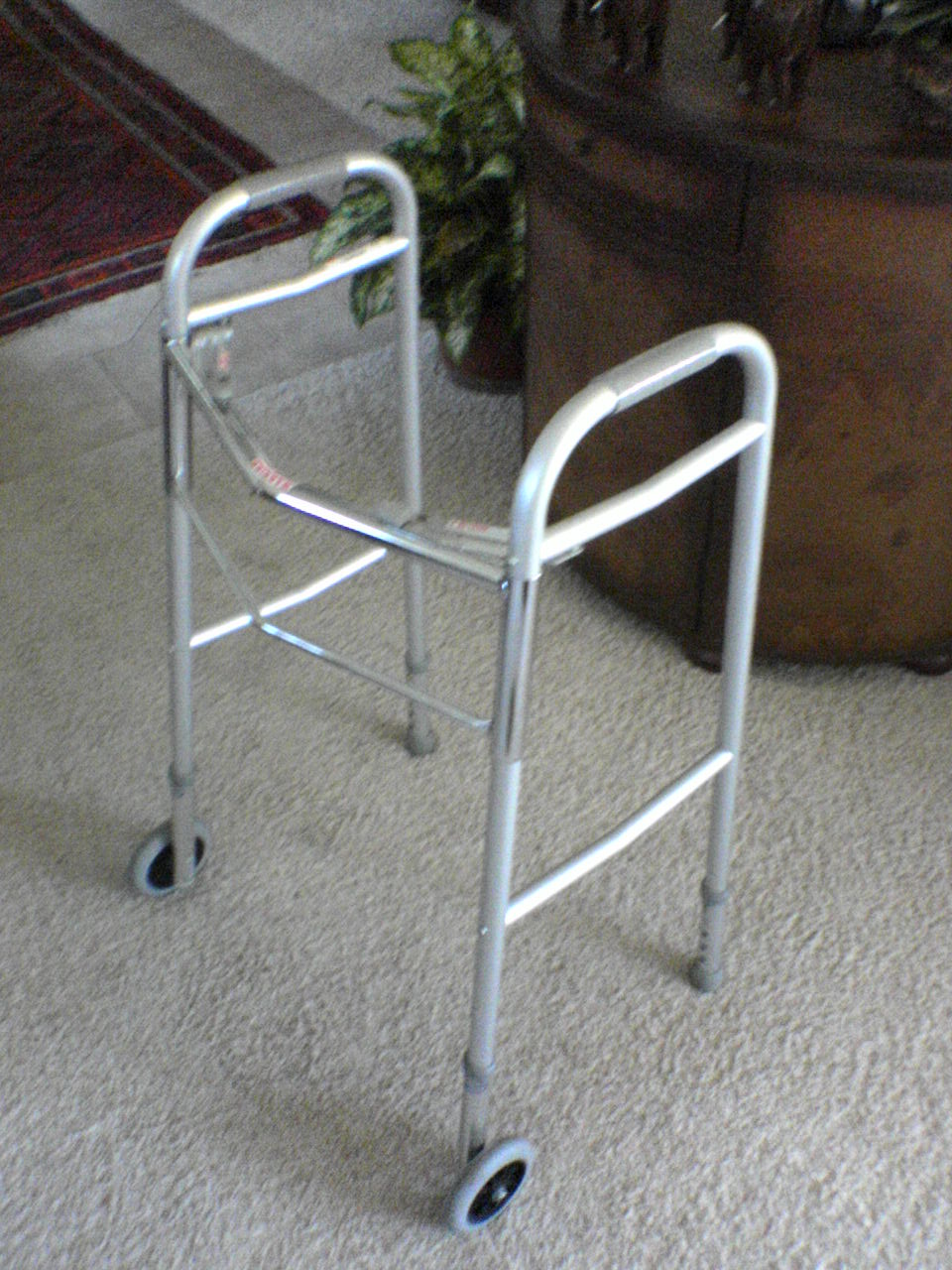
For many older adults, the best indoor walker is a **two-wheel folding walker**, not a four-wheel rollator. Front wheels let the frame move without being lifted at every step, while rear tips or glides add friction and limit speed. That combination generally suits short, controlled routes through a bedroom, bathroom, kitchen, and hallway.
The **Drive Medical Deluxe Two Button Walker with 5-inch Wheels** is our best overall starting point because it is simple, supports up to 350 pounds, and has parts that are widely available. The **Drive Deluxe Two Button Walker without wheels** is the narrowest and most controlled pick for someone who can safely lift the frame. The **Drive Trigger Release Walker** is easier to fold for limited finger dexterity, while the **Stander Wonder Walker Plus** earns our compact-storage pick. The **Trust Care Let's Go Indoor** is a specialist option for carrying meals or laundry with one-hand braking.
These recommendations are based on published dimensions, controls, intended use, and serviceability—not on the idea that one product fits every gait. A physical or occupational therapist should choose and fit the device after a fall, operation, stroke, sudden change in walking, or new weight-bearing restriction. Product details and manufacturer prices were checked in August 2026; confirm the exact item number before ordering.
Our Indoor Walker Picks
| Pick | Best for | Width | Weight | Capacity | Key tradeoff | | --- | --- | ---: | ---: | ---: | --- | | Drive Deluxe Two Button with 5-inch Wheels | Best overall two-wheel walker | 24 in | about 7.5 lb | 350 lb | Needs enough doorway and turning clearance | | Drive Deluxe Two Button without wheels | Best narrow, maximum-control frame | 20 in | 5.5 lb | 350 lb | Must be lifted and placed for every step | | Drive Deluxe Trigger Release | Best folding controls for limited dexterity | 23.5 in | 6 lb | 350 lb | No front wheels in the base configuration | | Stander Wonder Walker Plus | Best compact storage and travel | 23–24 in | 7–8 lb | 300 lb | Swivel wheels require careful setup and control | | Trust Care Let's Go Indoor | Best for carrying household items | 21.5 in | 14.3 lb | 220 lb | No seat; indoor-only rolling design |
A product's overall width does not reveal how the person will fit inside it. Confirm handle spacing, step clearance, height range, and the user's ability to control the frame. Measure the clear opening through each doorway rather than relying on the nominal door size.
Best Overall: Drive Deluxe Two Button Walker with 5-Inch Wheels
The Drive Medical Deluxe Two Button Walker with 5-inch Wheels is a conventional two-wheel walker that suits many indoor recovery and aging-in-place routines. Five-inch front wheels roll across hard flooring and low carpet, while the rear glide caps stay in contact with the floor. The user can advance the frame without fully lifting it, but the rear legs prevent the free rolling of a four-wheel device.
The adult model has an overall width of 24 inches, a 32-to-39-inch handle-height range, a 350-pound capacity, and a listed weight around 7.5 pounds. Each side folds independently through a push button that can be operated with fingers, a palm, or the side of a hand. Independent sides can also help when angling through a constrained storage spot, although the walker should be fully open and locked before walking.
Drive's rear glide caps are intended to slide over common surfaces. How they feel depends on the home: a glide that moves smoothly across carpet may feel quick on polished wood, while a rubber rear tip may drag on carpet but provide more resistance on tile. A therapist can recommend tips, skis, or glides for the person's gait and flooring.
Choose this model when the user needs a predictable two-wheel frame, has room for a 24-inch width, and does not require a seat. It is less suitable when the bathroom opening is extremely narrow, the user cannot keep the rear legs from catching, or longer community walks require braking and rest stops.
Best Narrow Standard Walker: Drive Deluxe Two Button without Wheels
The Drive Deluxe Folding Walker, Two Button is only 20 inches wide and weighs 5.5 pounds. All four legs end in floor-contact tips, so the frame remains stationary until the user lifts and places it. The aluminum frame supports up to 350 pounds and uses the same independently folding side design as Drive's wheeled version.
That narrow width can solve a genuine access problem at a bathroom or crowded bedside. A no-wheel walker can also be appropriate when a person needs a slow, deliberate gait and enough arm control to pick up the frame evenly. The U-shaped front frame provides clearance that lets the person stand closer during certain transfers.
The tradeoff is effort and coordination. The pattern is lift, place, step, then repeat. Someone with weak arms, painful shoulders, poor timing, or fatigue may set the walker too far ahead or fail to clear the floor. Dragging rubber tips instead of lifting them can make the frame chatter or catch. A narrow product is not a good bargain if the person cannot use its gait pattern safely.
Choose this model only after observing the user on their usual route. It is a strong candidate for maximum control over short distances and tight spaces, but a two-wheel walker is often easier for continuous household walking.
Best Folding Controls: Drive Deluxe Trigger Release Walker
The Drive Deluxe Trigger Release Folding Walker replaces small push buttons with triggers below the handgrips. The user can reach the releases without completely taking the hands away from the support area. That may be helpful for arthritis, limited finger dexterity, or hands that cannot press a recessed button reliably.
The adult version is 23.5 inches wide, weighs 6 pounds, adjusts from 32 to 39 inches high, and supports 350 pounds. Drive also lists a youth version with a 25-to-32-inch height range. The base configuration has four tips rather than front wheels, so the same lift-and-place cautions apply.
Trigger releases make folding easier; they do not change the support category or make it safe to collapse the frame while walking. Both sides must lock open before use. Test whether the user could accidentally touch a trigger during a transfer and whether the caregiver understands the latch. If front wheels are clinically appropriate, confirm compatible components with the manufacturer or equipment supplier rather than improvising attachments.
This is our choice when manipulating the fold is the main difficulty. If the walker stays open all day and finger controls are not a problem, the less specialized Drive two-button frames may be simpler and less expensive.
Best Compact-Folding Walker: Stander Wonder Walker Plus
The Stander Wonder Walker Plus folds into a roughly 5-by-7-inch bundle, which is much easier to park beside a chair or place in a car than a conventional flat-folding frame. It has two six-inch front wheels, rear ski glides, a storage basket, and a 300-pound capacity.
The Standard is 24 inches wide and deep, weighs 8 pounds, and adjusts from 32.5 to 39 inches. The Short version is 23 inches wide and deep, weighs 7 pounds, and adjusts from 28 to 33 inches. Those distinct sizes are useful because a short user may need lower handles without accepting an oversized frame.
The front wheels can be locked straight or allowed to swivel. Fixed wheels provide a more familiar two-wheel-walker path; swivel mode reduces the need to lift or pivot the frame during turns but also changes steering. Someone who leans heavily, has poor directional control, or moves the walker too far ahead may do better with the wheels locked. Make that decision during fitting rather than treating swivel as an automatic upgrade.
The Wonder Walker Plus costs more than a basic aluminum walker—the manufacturer listed it at $169.99 when checked—but its compact fold can be worth paying for when storage is the barrier that makes a person leave a walker elsewhere. Choose the Short based on wrist height and gait, not stature labels alone.
Best for Carrying Meals: Trust Care Let's Go Indoor
The Trust Care Let's Go is an indoor rolling walker with a removable tray rather than a standard pickup frame. At about 21.5 inches wide, it moves through confined rooms and can transport a plate, drink, phone, or folded laundry. A horizontal brake bar runs across the handle and operates both rear wheels, so it can be used with one hand.
The device weighs about 14.3 pounds, supports a 220-pound user, and adjusts from approximately 32.7 to 37.4 inches high. Its tray is about 16.5 by 13.8 inches, with a published maximum load around 11 pounds. Soft six-inch wheels are designed for indoor floors, and the folded unit can stand on its wheels.
This design addresses a common failure in walker use: a person needs both hands on a standard walker but tries to carry a meal or mug anyway. It may support independence between the kitchen and table without adding a dangling bag. However, it has no resting seat, rolls on four wheels, and does not provide the same fixed support as a two-wheel or no-wheel frame.
Choose it for a person who needs light rolling support, can manage the continuous brake, and remains on controlled indoor surfaces. It is not our default after surgery or for heavy weight-bearing. A user who needs an outdoor device or a place to sit should be evaluated for another category rather than stretching this product beyond its purpose.
No Wheels, Two Wheels, or Four?
The number of wheels changes the movement pattern more than any accessory does.
**No-wheel walkers** are planted, lifted, and planted again. They provide a broad stationary base during each step, but they demand enough arm strength and coordination to clear the floor. They can work for short routes and prescribed step-to gait patterns.
**Two-wheel walkers** keep the front on the floor while the rear tips or skis slide. They usually offer the best indoor compromise between continuity and speed control. The user must stay within the frame and avoid pushing it far ahead.
**Four-wheel rolling walkers and rollators** move easily and often include hand brakes. They suit people who can steer, brake, and control forward momentum. Easy rolling becomes a disadvantage when someone relies on the frame for substantial weight-bearing or cannot remember the brakes.
Do not add tennis balls, wheels, or homemade glides without guidance. Floor-contact parts affect friction and gait. Use components approved for the exact walker, replace them as they wear, and reassess whenever a modification makes the device feel noticeably faster or slower.
How to Measure the Home
Start with the routes used when risk is highest: bed to bathroom, favorite chair to kitchen, and front door to the car. Use a rigid tape measure and record the smallest clear opening with the door fully open. Hinges, trim, doorstops, grab bars, and the user's hands reduce usable space.
Measure turning areas, not only straight paths. A walker may pass through a doorway and still fail beside the toilet or between a bed and dresser. Mark a candidate's width and depth on the floor with painter's tape, then move that rectangle through the route while leaving space for the user's feet.
Check each surface transition:
1. Hard floor to carpet 2. Low rug edges and anti-fatigue mats 3. Raised bathroom or entry thresholds 4. Elevator gaps and lobby mats 5. Sloped flooring near a drain or doorway
Remove loose throw rugs and route cords away from the travel lane. Reposition light furniture that moves when bumped. If the walker only fits when the person turns sideways, folds one panel, or leaves it outside the bathroom, the route needs a different device or a home change.
How to Fit Handle Height
Have the user wear their normal indoor shoes and stand as upright as comfortably possible with arms relaxed. A common starting point places the grips near the wrist crease, creating a slight elbow bend when the handles are held. This is not a substitute for fitting: arm length, posture, pain, weakness, and weight-bearing instructions can change the correct height.
Set all legs to matching adjustment holes unless the clinician specifically directs otherwise. Push every button fully through its hole and check that the frame does not rock. The user should be able to step within the walker without hitting the rear cross area and without reaching forward with locked elbows.
Handles set too high can raise the shoulders and weaken downward control. Handles set too low can encourage bending and place the frame ahead. Recheck settings after changing shoes, tips, wheels, or glides because those changes affect effective height.
Bathroom and Nighttime Use
Bathroom travel deserves its own test. Urgency, darkness, hard surfaces, and turning near the toilet make this different from walking through an open showroom. Confirm that the frame clears the door, approaches the toilet without trapping the user, and leaves space for any toilet safety rail.
A walker is not a grab bar. It may tip or slide when pulled sideways during a toilet or shower transfer. Install appropriately selected fixed supports where the person needs to turn or lower. Never take a standard walker into a wet shower unless it is specifically designed and prescribed for that environment.
At night, place the walker within reach without blocking the path out of bed. Add low-glare lighting that reveals the frame and floor. Avoid leaving a tray, bag strap, clothing, or oxygen tubing where feet enter the walker. If the person repeatedly forgets the device during nighttime trips, review the entire routine rather than adding louder reminders alone.
Flooring, Tips, and Glides
Rubber tips provide friction and can slow a walker on smooth flooring, but they wear down and may grab carpet. Plastic skis or glide caps travel more freely across carpet and transitions, yet may feel fast on polished surfaces. Inspect both rear legs so wear remains even.
A frame that begins pulling to one side may have a worn tip, a wheel that no longer turns freely, a mismatched height setting, or a bent component. Do not compensate by teaching the person to push harder. Replace approved wear parts or have the walker serviced.
Thick carpet can make any pickup or two-wheel walker tiring. Deep transitions can stop small front wheels abruptly. Watch the actual user cross them: the safe response to a caught wheel is to stop and reposition, not lunge forward. Home modifications may be more effective than choosing a heavier frame.
Bags, Trays, and Carrying Objects
A securely attached walker pouch can hold a phone, glasses, tissues, or a light water bottle. Keep the load centered and within the manufacturer's limits. A swinging grocery bag on one handle changes balance and can narrow doorway clearance.
Trays are useful only when they fit the specific frame, remain level, and do not prevent the user from gripping the walker. Open drinks and hot food add burn and slip risks. A covered cup and small portions are easier to control. If a tray blocks the folding latch or makes the walker front-heavy, remove it.
Avoid carrying objects by taking one hand off the frame. If moving meals is a daily goal, an indoor trolley walker such as the Let's Go—or caregiver help—may be safer than loading a standard walker with accessories. Test the full task from kitchen counter to table, including doors and the final transfer.
Transfers and Doorways
Do not pull on a rolling or folding walker to stand unless a clinician has taught a specific technique and the device is stabilized. A common approach is to push from the chair's armrests, gain balance, and then move the hands to the walker. The right method depends on surgery precautions, strength, and the furniture.
Opening a door while using a walker requires planning. The person may need to approach, stabilize, operate the handle, move the door, and reposition without stepping outside the frame. Spring-loaded doors and narrow vestibules can make this unsafe. A therapist can teach the sequence and recommend lever handles, hold-open devices, or environmental changes.
Never use the walker on stairs. Arrange a separate stair plan and place an appropriate device on each level if carrying the walker would expose the user or caregiver to a fall.
Buying and Trial Checklist
Before keeping a walker, confirm that:
- The prescribed walker category matches the person's gait and support needs.
- Handle height and width fit the user in ordinary shoes and clothing.
- The open frame clears every essential route with hand room.
- The walker turns at the toilet, bedside, kitchen, and entry.
- Tips, glides, or wheels behave predictably on every floor type.
- Folding controls lock positively and are understandable to the caregiver.
- The person can approach a chair and transfer without pulling the frame over.
- Any pouch or tray stays within its limit and does not affect foot clearance.
- Replacement tips, glides, wheels, and grips are available.
- The return policy allows a meaningful indoor trial.
Keep the box until fitting and route tests are complete. Used walkers can be economical, but inspect for bent tubing, loose grips, missing hardware, worn tips, and folding joints that do not lock. Check the exact model for recalls and replacement-part support.
Common Questions
Is a walker or rollator better indoors?
A two-wheel walker is often the safer indoor starting point when someone needs meaningful support and controlled speed. A rollator may suit a person with a smoother gait who can reliably steer and operate brakes. The diagnosis, weight-bearing need, cognition, grip, and floor plan matter more than convenience.
Can a walker be too narrow?
Yes. A narrow frame may squeeze the hips, interfere with the hands, or prevent a natural step within the base. The device must fit the body as well as the doorway. Do not choose the 20-inch Drive frame solely because it clears a bathroom opening.
Are walker skis safe on wood floors?
Approved skis or glides can work on wood, but friction varies with the part and finish. Test under supervision, inspect for grit that could scratch flooring, and confirm the walker does not move faster than the user. Rubber tips may provide more resistance but can also catch.
Does Medicare cover an indoor walker?
U.S. Medicare coverage generally depends on current rules, medical necessity, a clinician's order, and an enrolled durable medical equipment supplier. Coverage does not guarantee every brand, accessory, or compact-folding upgrade. Ask the supplier what exact model is covered and what an upgrade would cost before purchasing retail.
When should the walker be reassessed?
Request reassessment after a fall, illness, medication-related dizziness, major strength change, new pain, change in footwear, or repeated abandonment of the device. Also reassess when tips wear unevenly or the person begins pushing the frame farther ahead.
The Bottom Line
The Drive Deluxe Two Button Walker with 5-inch Wheels is our best overall indoor walker for its controlled two-wheel design, 350-pound capacity, and straightforward serviceable frame. The wheel-free Drive Deluxe is a narrow option when the user can safely lift it. Choose the Trigger Release version for easier folding controls, the Stander Wonder Walker Plus when compact storage is essential, or the Trust Care Let's Go for light support while carrying household items.
Start with the person's gait and the therapist's recommendation, then measure the real home. The right walker should clear essential routes, remain close during each step, and behave predictably on every floor. A simpler, correctly fitted frame is more useful than a feature-rich device that the person avoids when the bathroom trip is urgent.