
checklist
Stairs Safety Checklist
Families dealing with Stairs Safety usually need a clear checklist they can use in one sitting and return to later.
A stairs safety checklist should answer one practical question: can the person move between levels without rushing, gripping unstable objects, missing a step edge, or becoming stranded halfway? Stairs can remain usable for many older adults, but they need good lighting, secure rails, clear surfaces, and a plan for days when strength or balance is worse.
Walk the stairs at the same time of day the older adult uses them most. Morning stiffness, evening fatigue, poor night lighting, laundry in hand, or a pet underfoot can change the risk dramatically. The safest checklist is built around the real trip, not the tidy version everyone imagines.
Watch One Full Trip First
Ask the person to describe how they go up and down the stairs on an ordinary day. Notice whether they use one rail or two, pause at the landing, carry items, look down at every tread, turn sideways, or pull on a wall edge. These habits show where the staircase is asking too much from their balance, vision, strength, or confidence.
Do not treat every staircase problem as a stairlift problem right away. A loose handrail, dim bulb, cluttered landing, worn carpet edge, or missing contrast strip can create a serious risk at a much lower cost. Bigger equipment decisions make more sense after the basic hazards are corrected.
Handrails
Every stair run should have a sturdy handrail that continues for the full length of the stairs. If possible, rails on both sides give the person support no matter which direction they are moving or which hand is stronger. The rail should be easy to grasp, securely anchored, and free of wobble.
Check the rail at the top and bottom steps, where many falls happen. A rail that stops too early forces the person to step without support at the exact moment they are changing levels. If the person reaches for a doorframe, wall shelf, banister spindle, or furniture at either end, the support pattern needs attention.
Steps, Treads, and Edges
Look for uneven step heights, cracked boards, loose nosing, worn carpet, lifted tape, slick wood, or torn tread covers. Even a small change in step depth can cause a toe catch when someone is tired or using bifocals.
Improve visibility at each step edge. Contrast tape, tread edging, or a consistent paint treatment can help someone see where each step ends. Avoid busy patterns on stair carpet because they can make depth harder to judge, especially for people with low vision or cognitive changes.
Lighting and Switches
Lighting should cover the full staircase, not just the top or bottom. Replace weak bulbs, add fixtures where shadows fall, and check glare from shiny surfaces. A bright bulb that creates a sharp shadow can be less helpful than even lighting along the full run.
Install switches at both ends of the stairs if they are missing. Motion-sensing lights can help at night, but they should turn on before the first step and stay on long enough for a slower trip. Test the timing with the older adult, not with a younger person moving quickly.
Landings and Doorways
Landings should be clear enough for a person to stop, turn, and regain balance. Remove baskets, shoes, packages, small tables, decorative plants, and storage bins from the top and bottom of the stairs. These areas often become clutter zones because they feel convenient, but they are also where recovery space matters most.
If a door opens directly onto stairs, check whether it blocks the rail, narrows the landing, or forces a backward step. A small hardware or storage change may reduce the chance of awkward turning at the edge.
Carrying Items
Stairs become more dangerous when someone carries laundry, groceries, a full drink, trash, or a pet item. Create alternatives before asking the person to "just be careful." Use a crossbody bag, a small backpack, a laundry chute, duplicate supplies on each level, or a family routine for moving heavier items.
If the older adult uses a cane or walker, decide where equipment should be stored on each level. Carrying a mobility aid up or down stairs can be awkward and unsafe. Some families keep a cane or walker upstairs and another downstairs so the person has support immediately after the stairs.
Footwear
Check the shoes actually worn on the stairs. Loose slippers, backless sandals, socks without grip, and long robes can all increase risk. A shoe with a secure heel, low profile, and grippy sole is usually safer than footwear that slides or catches.
Bare feet may feel stable to some people, but they can also slip on polished wood or make painful foot conditions worse. The right answer depends on the surface, foot health, and the person's walking pattern.
Pets and Household Traffic
Pets, children, and other adults can turn a manageable staircase into a crowded one. If a pet likes to race ahead, pause on steps, or sleep near the landing, use gates, training, or a separate routine during stair use.
Family members should avoid passing the older adult on the stairs unless there is plenty of space and the person is steady. A simple household rule can prevent bumps, rushed movement, and surprise turns.
Outdoor Steps
Outdoor steps need the same review, plus weather planning. Check for algae, leaves, ice, broken concrete, loose bricks, poor drainage, and missing rails. Wet outdoor steps can become hazardous even when indoor stairs are still safe.
Add lighting from the parking area or walkway to the door. If the person receives deliveries, uses rideshare, or returns from appointments after dark, the route should be safe without someone holding a phone flashlight.
When to Consider Bigger Changes
Consider a stairlift, ramp, bedroom relocation, or one-level living plan when the person avoids stairs, has repeated near falls, needs hands-on help every time, becomes short of breath halfway, or cannot carry out basic routines without using the stairs many times a day.
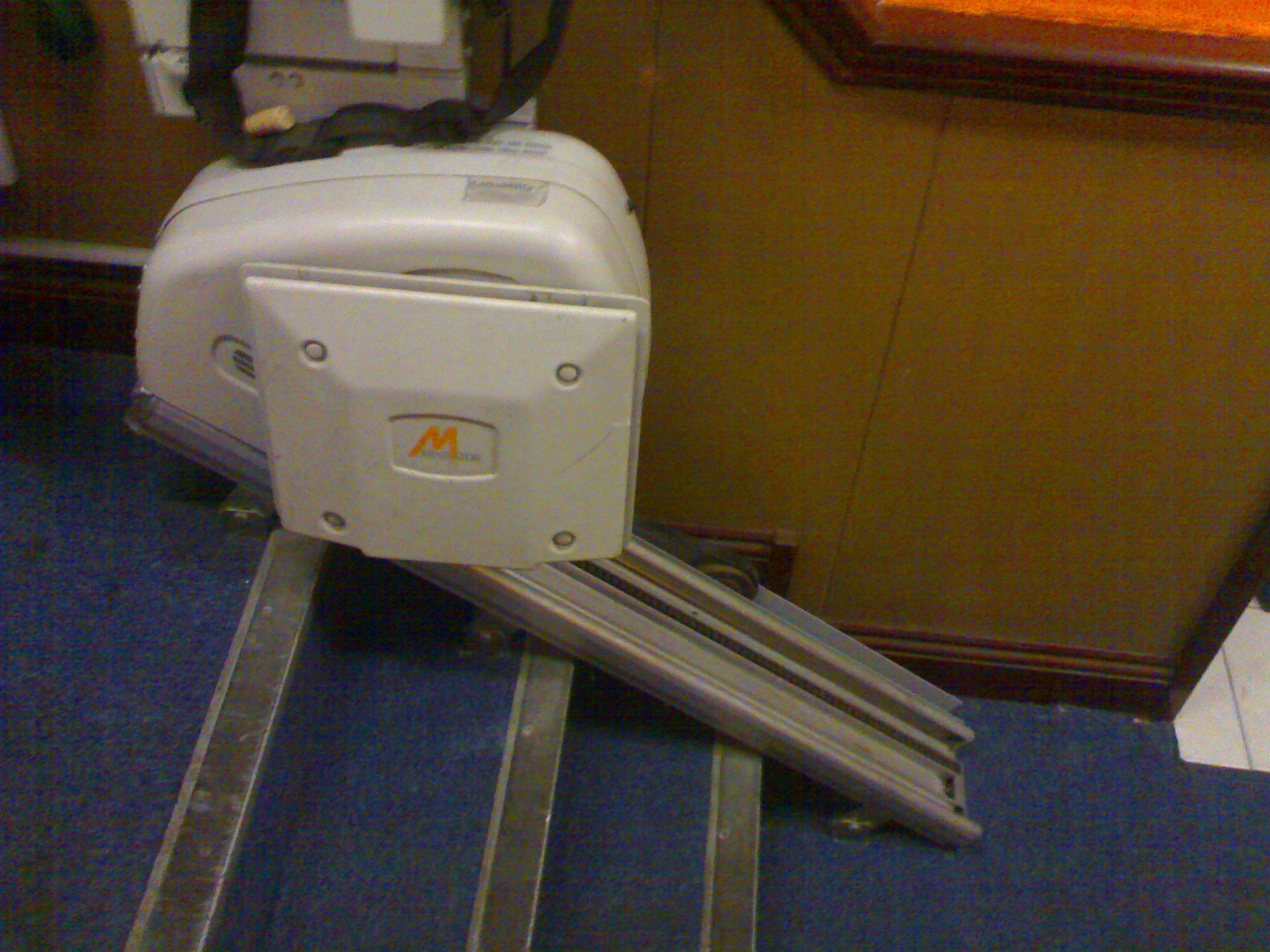
A stairlift can help some households, but it is not a full safety plan. The person still has to transfer on and off the seat, manage the top and bottom landings, and have a plan during power outages or equipment problems. Measure the staircase and ask vendors about installation, maintenance, weight limits, backup power, and removal costs.
Quick Stairs Walkthrough
- Tighten or replace any handrail that moves when pulled.
- Add a second rail if one-sided support is not enough.
- Clear the top step, bottom step, and all landings.
- Improve lighting so every step edge is visible.
- Mark step edges when depth or contrast is hard to judge.
- Repair loose carpet, damaged treads, lifted tape, or slick surfaces.
- Stop carrying laundry, trash, or heavy items on the stairs when balance is uncertain.
- Keep needed supplies on both levels to reduce unnecessary trips.
- Review footwear used on the stairs, including slippers and nighttime shoes.
- Make an alternate plan for bad days, illness, or after medical appointments.
When to Ask for Outside Help
Ask the primary care team, physical therapist, or occupational therapist for input if there has been a fall, new weakness, dizziness, shortness of breath, numbness, medication changes, or a sudden drop in confidence. Stairs safety is partly a home issue and partly a mobility issue.
An occupational therapist can watch the actual stair routine and recommend rail placement, equipment, pacing strategies, or room changes. A contractor may be needed for structural rail work, tread repair, outdoor step repair, or stairlift installation.
Common Questions
Is one handrail enough?
Sometimes, but two rails are often safer for older adults who have weakness on one side, use stairs slowly, or need support in both directions. If the person reaches for the wall or banister with the free hand, that is a sign one rail may not be enough.
Should we add non-slip stair treads?
Non-slip treads can help when they are flat, secure, and easy to see. They can create new hazards if edges lift, adhesive fails, or the pattern makes step depth harder to read. Check them regularly after cleaning and heavy use.
When is it time to stop using stairs?
It may be time to move essential routines to one level when stairs require hands-on help, cause fear, lead to repeated near misses, or cannot be made safer with rails, lighting, surface repair, and pacing changes. The goal is not giving up independence; it is protecting the routines that matter most.
What should we do after a stair fall?
Seek medical advice after a fall, especially if there is head impact, pain, weakness, confusion, dizziness, or blood thinner use. Before the person resumes the same stair routine, review what happened, fix immediate hazards, and ask whether therapy or a temporary one-level setup is needed.