
best
Best Bedside Commodes
Families comparing Bedside Commodes need a tighter shortlist, simpler criteria, and buying guidance rooted in real home use.
The best bedside commodes are the ones that fit both the person and the space where nighttime toileting happens. Start with the transfer: can your parent stand, turn, manage clothing, and sit using their usual support? Then compare seat height, room between the arms, the footprint beside the bed, and who will empty the bucket.
Our shortlist includes a basic Medline model, a folding Drive model, a padded drop-arm option, and a wider Medline commode. These are research-based candidates for different needs, not products we have tested in a home or a clinical ranking of fall prevention. Product details and displayed prices were checked on September 7, 2026. Confirm the exact model, delivered price, and specifications before buying.
Best bedside commodes: the shortlist
| Candidate | Best reason to consider it | Published capacity | Main buying question | | --- | --- | --- | --- | | Medline MDS89664KD | Basic bedside setup with a relatively narrow frame | 350 lb | Does the seat and arm spacing fit the user? | | Drive 11148-1 | Folding storage between periods of use | 350 lb | Does this exact version include the bucket and accessories you need? | | Medline G1-301DPX1 | Padded seat and drop arms for an assessed transfer plan | 350 lb | Can the supplier resolve conflicting published dimensions? | | Medline G1-201LBX1 | More space between the arms and higher capacity | 650 lb | Can the bedroom accommodate its 31-inch overall width? |
Specifications come from the Medline basic commode listing, Drive commode catalog, Medline equipment catalog, and Medline extra-wide listing.
“Best” here means worth comparing for the stated use. A model with a higher capacity is not automatically the best fit for a smaller person, and a folding frame does not establish that someone can transfer safely. If hands-on help is needed, have an occupational therapist or physical therapist assess the equipment and teach the caregiver the appropriate transfer before nighttime use.
Best basic candidate: Medline MDS89664KD
Medline lists this steel commode with an adjustable seat height of 16.5–22.5 inches, 19 inches between the arms, and an overall width of 21.25 inches. Its stated capacity is 350 pounds. The manufacturer describes bedside, over-toilet, and toilet-support configurations, plus a removable seat, splash guard, and toilet-paper holder. Follow the instructions for each configuration. See the MDS89664KD product details.
This is our starting candidate for a family whose main problem is the distance to the bathroom and whose transfer needs suit a basic frame. In a small bedroom, write the overall width on your room sketch before looking at accessories. A paper holder is useful only if it ends up within comfortable reach after the chair is placed.
The tradeoff is that an ordinary frame may not provide the opening needed for a sideways transfer. Do not assume the arms move because another similar-looking Medline model has drop arms. Also distinguish a knockdown frame, which disassembles, from a frame intended to fold conveniently for storage.
Before choosing it, ask the seller for the current instructions and the bucket replacement number. If the person will use it every night, being able to order the correct replacement seat or pail is more useful than a bundle of accessories that do not fit. Choose this candidate only after the basic seat dimensions and intended transfer have been checked.
Best folding candidate: Drive 11148-1
Drive describes the 11148-1 as a folding steel commode with tool-free setup, a plastic seat and lid, and a 7.5-quart bucket supplied with a cover and splash shield. Its catalog states a 350-pound capacity. The neighboring 11148N-4 listing has different packaging and an 8-quart bucket, so the suffix matters. See the Drive manufacturer catalog.
This candidate makes sense when storage is a real requirement: for example, a family is comparing equipment for intermittent visits or a defined period of recovery. Ask for the folded dimensions, product weight, and assembly instructions. “Folds flat” alone does not tell you whether it will fit in your cupboard or whether the person moving it can handle it comfortably.
Think through where the bucket, back piece, and other removable parts will go when the frame is stored. A folding feature loses much of its benefit if the cleaned pail has no storage location or assembly has to be improvised each evening. Keep the instructions and small components together in a labeled container.
We would not pay extra for folding if the commode will remain in one place indefinitely. For that household, focus the comparison on seat fit, cleaning access, and replacement parts. Before ordering, request the dimensions for the exact 11148-1 being shipped rather than borrowing measurements from a marketplace listing that combines several Drive versions.
Best padded drop-arm candidate: Medline G1-301DPX1
A drop-arm design is worth discussing when an assessed transfer requires side access. Medline identifies the G1-301DPX1 as a padded drop-arm commode with a 350-pound capacity. However, its catalog and retail page disagree about dimensions. The catalog lists a 19–23-inch seat height, 20-inch inside arm width, and 23-inch overall width; the retail page gives different figures. Compare the Medline catalog with the G1-301DPX1 retail listing.
Treat this as a conditional candidate until the supplier verifies the current unit's measurements in writing. If the purchase depends on clearing a bed frame or matching a transfer height, a disagreement of several inches is enough to pause the order. Ask for a current instruction sheet and a measurement of the assembled product, not simply reassurance that it is “standard size.”
Padding and drop arms answer different questions. Padding concerns the seating surface; a movable arm concerns access. Neither tells you whether someone can sit unsupported or whether a caregiver can assist safely. Have the therapist review the arm mechanism, bed position, and any proposed transfer aid together.
Also ask about the cleaning instructions for the padded surface and the availability of a replacement seat. For comparison purposes, consider whether the person actually prefers that surface during a supervised fitting. A photograph cannot establish comfort, and a padded commode should not be selected as treatment for a pressure injury without clinical advice.
Best extra-wide candidate: Medline G1-201LBX1
The G1-201LBX1 listing specifies a 650-pound capacity, a seat height range of 16–22 inches, and 24 inches between the arms. Overall width is listed as 31 inches. Those measurements make it a candidate when a standard frame offers insufficient space, provided the room and transfer arrangement can accommodate it. See the Medline extra-wide commode listing.
The first tradeoff is the footprint. Draw the full outside dimensions beside the bed, then add the space needed by the user and any helper. A chair that can enter the bedroom may still crowd the side where the caregiver needs to stand. Ask about overall depth too; width is only one part of the layout.
The second question is whether the arm spacing works for this particular person. More space can address a cramped fit, but do not buy the widest option solely because it sounds more accommodating. During assessment, check how the person reaches the supports and manages clothing while seated.
At the time of review, Medline's page displayed an out-of-stock message. Use this model as a specification reference if it is unavailable, and compare any substitute line by line. A supplier's alternative may share the same capacity while having a different minimum height, seat opening, or frame width. Record the replacement model number before agreeing to a substitution.
What to expect to pay
Use prices as comparison points, not a promise of what will be available at checkout. Medline's category page displayed $53.95 for MDS89664KD and $103.95 for G1-301DPX1 during our review. The extra-wide G1-201LBX1 page showed $95.45 in its related-purchase panel, alongside an out-of-stock message. These are US-dollar snapshots; shipping, tax, seller, and availability may change the total. Sources: Medline category listings and extra-wide product page.
We did not verify a current checkout price for the Drive candidate. Request a quote for that exact model instead of comparing an advertised starting price attached to a group of products. Check whether the listing is for one commode, a case, or an accessory; product photos can make a replacement pail look like part of a complete chair offer.
Create a simple first-month budget with four entries: the delivered chair, optional compatible liners, cleaning supplies required by its instructions, and any spare bucket you want. As an arithmetic example, two liners daily would require about 60 liners in 30 days. Multiply that quantity by the actual unit price on the pack you intend to buy.
Read the return terms before opening or using the product. Ask specifically about assembled toileting equipment, return freight, and what happens if published measurements prove wrong. If you hope to use insurance or an equipment service, confirm its ordering process before paying out of pocket. A shop's eligibility badge does not answer what your particular plan will pay.
Measure the person, the bed, and the working space
Bring a tape measure and a written checklist to the comparison. Separate seat height, width between the arms, outside frame width, seat depth, and the opening dimensions. Sellers sometimes use “seat width” without making clear which measurement they mean. Ask for a diagram or an annotated photograph when the label is ambiguous.
For a static commode, Kingston and Richmond NHS guidance emphasizes assessment, intact leg clips and rubber feet, equal leg settings, and a seated position with feet supported. It also identifies one-sided weakness, heavy leaning, weak upper-body support, and unsuitable flooring as reasons its static commode may be inappropriate. Follow your own equipment instructions and assessment; do not transfer the leaflet's model-specific weight limit to another chair. See the NHS static commode guide.
Use the bed in its normal nighttime configuration when planning. Include the duvet hanging over the edge, an open drawer, the usual walking aid, and the door swing. A daytime photograph of a tidied room can conceal the objects that will occupy the transfer space at night. A cardboard outline of the proposed frame helps identify obvious collisions before delivery.
Consider the helper's tasks separately. Where will clean supplies be placed? Can the bucket be removed without moving furniture? Is there a clear route for carrying it to the toilet? These are planning questions rather than a substitute for a transfer assessment, but answering them before ordering can prevent an otherwise suitable chair from becoming impractical.
Keep one measurement sheet for all candidates. Include a column headed “confirmed by supplier” and enter the date and exact SKU. That is particularly helpful when two family members shop independently and send links to products with nearly identical names. Compare the sheet together before anyone places an order.
Plan the nighttime routine before the first use
Discuss the arrangement with your parent in daylight. Ask what would make it acceptable: privacy from a doorway, a reachable light switch, a specific location for tissues, or knowing who will handle cleanup. Avoid introducing a new piece of toileting equipment at bedtime and expecting it to feel familiar immediately.
Have the intended user and helper review the setup with the clinician or equipment professional when assistance is needed. The practice should address the whole task, including clothing and returning to bed, rather than only sitting down. If the arrangement depends on the caregiver lifting more than they have been trained to manage, the plan needs reassessment.
Write down who responds overnight and how that person will be called. A phone or call device needs to be reachable from the actual seated and sleeping positions. A family member who is asleep in another room may not hear an ordinary voice. Test the agreed communication method during the day, including what happens if the first helper does not respond.
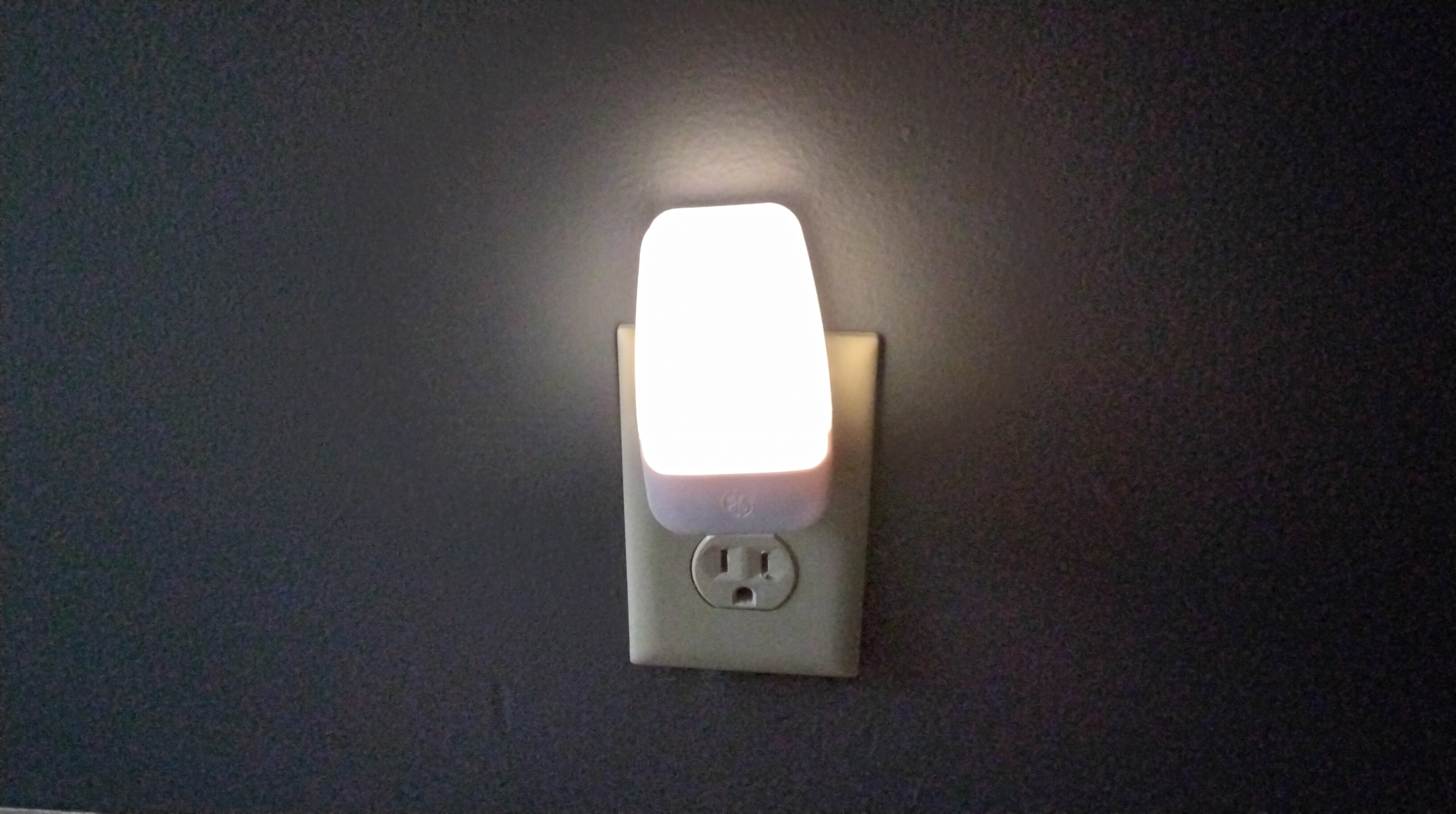
Arrange lighting so the chair, floor, and necessary supplies can be seen without searching for a switch. The broader Guy's and St Thomas' home falls guidance includes keeping routes clear and considering both access to a commode and how it will be emptied. The featured photograph illustrates nighttime lighting; it does not show or endorse a commode model.
After the initial supervised use, collect specific feedback. “The paper is behind my elbow” or “the door catches the back of the chair” gives the family something concrete to address. If the difficulty involves balance, pain, leaning, or the transfer itself, seek professional reassessment rather than solving it by adding an unapproved cushion or changing the frame.
Make bucket care part of the buying decision
Ask to see how the bucket comes out of the frame. Compare the handle, cover, clearance beneath the seat, and whether the instructions allow removal in the direction available in your room. Someone with limited hand strength may find the bucket task more relevant than whether the chair assembles without tools.
Decide who will empty and clean it after use. A commode may shorten the user's route while creating a carrying task for someone else; the NHS home falls guidance specifically asks families to consider who can empty it. Plan that responsibility before purchase, especially when the person lives alone. See staying safe at home.
Follow the manufacturer's cleaning directions for the frame, seat, and bucket, including which products can be used on padding. Keep the instructions accessible to every helper. If a care team has provided additional infection-control directions for the household, ask how those fit the equipment's material requirements rather than improvising a stronger mixture.
If you prefer liners, confirm compatibility with the exact pail. Record the pack size and replacement order number. Do not assume a liner advertised for a standard commode will fit a wider model. Liners also do not resolve cleaning of the seat and other touched surfaces; ask the supplier to explain the complete care routine.
A second compatible bucket can be considered as a household convenience if there is a clean storage place for it. Label replacement parts with the model number and retain the receipt. Before the return window closes, check that all promised accessories arrived and that the family understands how each component is used.
Questions families often ask
Can a bedside commode replace the bathroom toilet?
It can provide a bedside toileting location when that is appropriate for the person, but it introduces bucket handling and a different transfer environment. Think about which specific trips it is intended to replace. A family may be planning nighttime use only, temporary recovery use, or a longer-term arrangement; those situations create different storage and cleanup needs.
Does a three-in-one commode fit every toilet?
Do not assume universal fit. For any model approved for over-toilet use, compare its instructions and dimensions with the actual toilet, including available clearance and nearby fixtures. Ask which components must be removed or installed. A bedside configuration and an over-toilet configuration should each be checked rather than treated as interchangeable without adjustment.
Is a wheeled commode better?
Wheels introduce a different equipment decision. If moving a seated person is part of the plan, ask a professional to select equipment explicitly intended for that purpose and teach its use. None of the stationary candidates here should be treated as an occupied transport chair. Convenience when moving an empty frame is a separate question from transporting a person.
What if my parent dislikes the idea?
Ask which part feels uncomfortable: the appearance, privacy, odor concerns, cleanup, or the feeling of losing independence. Show the proposed location and explain who would do each task. Where appropriate, ask about a professionally arranged trial. Buying an expensive model without that conversation may leave the family with equipment that never becomes part of the routine.
What should we do before clicking buy?
Agree on the exact model, verify the dimensions that matter, confirm availability and return terms, and identify the person responsible for setup and cleanup. Save the manufacturer's instructions with the order. If the fit or transfer remains uncertain, take that specific question to an occupational therapist or equipment supplier before choosing between the shortlist candidates.
For help assessing the wider room and routine, visit our nighttime bathroom risk starting guide.
Image credit: Nightlight-1.jpg by ᐃᓄᒃᑎᑐᑦ, available under CC0 1.0.