
best
Best Outdoor Handrails
Families comparing Outdoor Handrails need a tighter shortlist, simpler criteria, and buying guidance rooted in real home use.
For an older adult using porch or entry steps, the best outdoor handrails are the ones that fit the approach to the door, attach to sound construction, and come with clear instructions for the conditions outside that home. Start with the mounting location: a wall beside the steps calls for a different shortlist from an exposed stoop that needs posts.
Our candidates are **EZ Handrail’s round aluminum kit with posts** for a short entry where the base layout fits, **Simplified Building’s Flat Black Surface 518** for a configurable surface-mounted option, and **Promenaid Endura** for an exterior wall-mounted project. These are recommendations to investigate for specific situations, based on published specifications. We have not physically tested these products or established that one prevents more falls than another.
This guide focuses on outdoor purchasing decisions: rain exposure, de-icing products, supporting surfaces, door clearance, and the cost of completing the installation. Product information and the price example were checked September 16, 2026. Confirm the current configuration and delivered price before ordering.
Compare these outdoor handrail candidates first
| Product or system | Entryway worth considering it for | Important limitation | Budget information | | --- | --- | --- | --- | | EZ Handrail round aluminum kit with posts | A short run with suitable concrete or wood mounting locations | Base plates, edge clearance, and rail length must fit the actual steps | Obtain a quote for the exact kit and installation | | Simplified Building Flat Black Surface 518, five-foot model | An exterior stair where a surface-mounted adjustable assembly suits the layout | Open ends and mounting details need a project-specific review | Listed at $699.99 for model SR-K-518-60-B | | Promenaid Endura configured handrail | An entry route alongside a suitable wall | The complete bracket, end, and connector selection determines the final price | Configure the full route and request an installed quote |
The listed Surface 518 price is a supplier snapshot in U.S. dollars, before any additional delivery, tax, or site work. The five-foot product listing identifies galvanized construction with a flat-black powder coating and angle-adjustable fittings.
The table is a starting point for comparing installations, not a universal ranking. A wall rail can be the better purchase when a suitable wall exists. Adding posts simply to match a preferred product may introduce unnecessary work and reduce usable space on a small entry.
First decide what the entrance actually needs
Describe the problem in one sentence before shopping. Examples include “Dad needs something to hold before stepping down from the porch” or “Mom loses contact with the rail while turning toward the front door.” These observations are more useful than a general request for a stronger railing.
Walk the route yourself and photograph the awkward location without asking your parent to repeat an unsafe movement. Notice where a person stands while unlocking the door, whether the storm door opens across the landing, and where bags or deliveries tend to accumulate. Include the approach from the driveway, not just the staircase in isolation.
A handrail provides a surface to grasp. A guard is the barrier along an open edge. Some entrances need both, and a single rail between two posts should not be purchased as though it automatically supplies the required edge protection. Have the installer identify the complete scope before removing an existing assembly.
For a parent who cannot use the entry steps safely even with assistance, pause the rail purchase long enough to discuss the route with an occupational therapist or another qualified professional. The useful project may involve a different entrance or a broader access change. A handrail is one component of an entryway, not evidence that the whole route is suitable.
EZ Handrail with posts: investigate the footprint before ordering
The EZ Handrail instructions describe three- or four-foot round rail kits, depending on the model, with a 1.9-inch outside-diameter rail, two posts, adjustable cradle brackets, and welded base plates measuring five by five inches. That footprint matters on a narrow tread. See the manufacturer’s round handrail with posts instructions.
Our assessment is that this product deserves a look for a short entrance where the installer has already confirmed appropriate post positions. A compact packaged assembly can make the quote easier to specify, but its nominal rail length does not establish that the user can hold it throughout the necessary movement.
Have the installer mark the proposed base locations with removable tape before placing an order. Check how much tread remains usable and whether the planned rail reaches a convenient position at the top. A family member should not need to reach around a door or stretch sideways from the bottom step to find support.
The same installation document includes surface-specific edge-clearance requirements and calls for backing beneath the attachment location on wood. Those details are reasons to obtain a site assessment, not instructions to improvise an attachment. Ask the contractor to identify the actual supporting material and explain how the current manufacturer instructions will be followed.
For price, request the complete model number, finish, included parts, and installed total. We did not establish a reliable current price for the exact kit during this review. Do not substitute the price of a wall-mounted EZ rail when comparing this post-mounted project.
**Most useful for:** families seeking a defined short-run kit whose dimensions fit confirmed mounting locations. **Reconsider it if:** the bases crowd the steps, the needed grasping route is longer, or the supporting surface requires a different attachment approach.
Surface 518: compare the configured assembly with a fabricated quote
Simplified Building’s Signature range describes the Surface 518 as an offset, floor-mounted system with a smooth gripping surface, adjustable angle, and open ends. Its Signature Handrail Line lists a starting price of $699.99. The five-foot flat-black model provides a specific configuration to use when requesting a comparison quote.
We would investigate this candidate where post placement and stair slope make a modular assembly attractive. Send the supplier photographs and dimensions of the entire entrance, including the upper landing. Ask whether the proposed arrangement covers only the sloping steps or also the transition onto the porch.
Open ends deserve an explicit conversation. Have the supplier and installer explain whether the standard end treatment suits the site and applicable requirements. If a different termination is needed, request its part number and price before treating the quote as complete.
At this hardware price, it is reasonable to obtain a quote from a local fabricator as well. Give both providers the same drawing and intended finish. Compare the final grasping route, base arrangement, attachment work, and maintenance instructions. “Custom” and “kit” describe purchasing methods; neither word establishes which installation is better for your parent.
Check delivery timing and return conditions before paying, especially if the order includes cut lengths or custom finishes. If someone else will install the kit, confirm that they accept the proposed components and have reviewed the instructions. Buying first and finding an installer afterward can make an unsuitable design harder to change.
**Most useful for:** an exterior project where the modular layout has been checked against the stairs. **Reconsider it if:** the chosen ends do not suit the route, a guard is also required, or a fabricated alternative offers a clearer complete solution.
Promenaid Endura: an option for a suitable exterior wall
Promenaid identifies its Endura anodized aluminum handrail as suitable for indoor or outdoor use in wet or dry environments. Its configurator lets buyers select finishes, bracket styles, end arrangements, and length. The same page recommends its TrueWood wood-wrapped option for dry locations, so the two finishes should not be treated as interchangeable outdoors. See the Promenaid configurator.
Our reason for including Endura is the opportunity to specify a wall-mounted rail around the actual entrance dimensions. Where there is suitable structural support beside the stairs, this may avoid post bases on the walking surface. Whether it is feasible depends on the wall and bracket arrangement, not simply the presence of siding or brick nearby.
Ask for a drawing showing the handrail relative to trim, gutters, light fixtures, and the open door. A wall may look unobstructed in a close product photograph while the proposed end lands against a downspout in your home. Photograph those details before requesting the configuration.
For a route that changes direction, have the supplier identify the bends and connectors needed. Ask the installer how the hand will travel through each joint. Do not assemble a shopping cart from separate straight sections and assume the connecting pieces will be obvious later.
Pricing must reflect the final length, supports, ends, and any transitions. A configurator’s initial display can describe a much smaller assembly than a full entry stair. Save the completed quote and give that specification to the installer so the hardware and labor estimates refer to the same project.
**Most useful for:** a route beside a structurally suitable wall where selectable components solve a specific fit problem. **Reconsider it if:** the wall cannot support the intended attachment or the available bracket positions leave the gripping route awkward.
Choose for the exposure at your own door
“Outdoor” should begin a discussion about exposure. Tell the seller whether the entrance receives coastal spray, road salt, irrigation, prolonged rain, or intense afternoon sun. Ask for the product’s written care requirements and warranty exclusions for those conditions.
Rain, leaves, and drainage
Look at the entrance during ordinary wet weather from a safe location. Does a gutter discharge near the steps? Does water collect around the proposed post base? Can leaves be removed without reaching through a narrow gap? These observations can reveal work that belongs in the estimate before any rail is attached.
Ask the installer to preserve drainage and explain how attachment penetrations will be handled for the actual construction. Do not add sealant around every opening on your own; the correct detail depends on the assembly. Likewise, a new handrail does not resolve a slippery or damaged stair surface. Review the tread and landing condition as part of the same project.
Snow and de-icing products
Make sure the proposed layout leaves enough room for the way the household clears snow. Ask who will clear the landing and the space around the bases. A narrow pocket that nobody can reach with the usual equipment may become an ongoing maintenance problem.
EZ Handrail’s published care instructions recommend mild soap and fresh-water washing quarterly and specifically call for protecting post bases and fasteners from corrosive de-icing salt. Follow the instructions for the exact product, rather than treating an aluminum rail as requiring no attention. See the manufacturer’s care and maintenance document.
Coastal conditions and strong sunlight
Ask the shortlisted supplier to confirm suitability for the home’s exposure in writing, including any extra cleaning schedule. Do not assume that all fasteners and coatings have the same requirements because the main rail material is similar.
For a sunny entrance, compare finish samples under representative conditions before choosing. Ask your parent whether the surface is comfortable to touch and easy to locate visually against the house. A color selected from an indoor screen may look quite different against bright paving or shaded siding.
Check the grasp and route before approving the design
The U.S. Access Board’s stairway guidance describes continuous grasping surfaces, clearance around the hand, rounded edges, and handrails that do not rotate in their fittings. It gives circular grip dimensions of 1¼–2 inches and a typical specified height of 34–38 inches above stair nosings under the ADA standards. These are useful discussion points, but the applicable requirements for a private residence must be confirmed locally. See the Access Board’s stairway guide.
Compare grip samples while your parent stands or sits securely. If they normally wear gloves outside, include those in the comparison. Note which shape lets the hand close comfortably without an awkward wrist position. A larger-looking product is not automatically easier to hold.
Next, ask the installer to show where the person first encounters the rail on approach and where contact ends near the door. Discuss ascent and descent separately. A convenient grip beside the top step may still leave a difficult reach from the driveway below.
If the person uses a cane or has limited use of one arm, seek individualized guidance about the layout. Avoid choosing a side solely because it is easier to drill. The drawing needs to account for how the person uses the entrance, while the installer checks geometry and structural requirements.
Evaluate the mounting surface before comparing installation prices
A photograph of a brick step does not reveal everything underneath it. Ask the contractor to distinguish the visible finish from the material that will actually hold the anchors. The same applies to stone caps, composite decking, and siding.
On a wood entry, ask whether the supporting framing can be inspected and whether additional backing is included in the quote. On masonry or concrete, ask the installer to assess condition, available dimensions, and the specified attachment locations. Loose material or a damaged edge should be addressed before the rail is treated as dependable support.
Avoid giving a handyman only a kit and an instruction to “make it work.” Request a proposal describing the mounting method, any preparation, and the components used. If the planned base cannot fit within the manufacturer’s requirements, change the plan rather than improvising smaller clearances.
For rented homes or shared entrances, settle who can authorize alterations before buying custom parts. For an owner-occupied home, ask the installer about local approvals or inspections that apply to the work. Product advertising cannot answer those site-specific questions.
Compare total cost using three separate numbers
Request **hardware**, **site preparation**, and **installation and finishing** as separate amounts. This makes it easier to see whether a high quote reflects the product or work the entrance already needs.
Hardware should include every rail section, post or bracket, end fitting, connector, and specified fastener. Site preparation might include repairing a supporting surface, adding backing, or removing an old assembly. Installation and finishing should identify labor, touch-up work, cleanup, and any agreed inspection.
Add shipping and tax before comparing totals. Ask what happens if an inspection reveals a hidden problem and how additional work will be approved. A quote that clearly identifies an uncertainty is easier to manage than one that hides it behind a single low number.
Use the $699.99 Surface 518 listing as a reference for that particular hardware configuration, not as an outdoor handrail project average. We have not supplied an installed-cost range because a wall rail on verified backing and a post system on damaged masonry involve different work.
If the first proposal exceeds the budget, ask whether a simpler finish or another supported configuration meets the same need. Preserve the required route and attachment design. Reducing the number of parts without supplier approval can change the system you thought you were buying.
Three entryway examples to discuss with a contractor
**A small concrete stoop:** The family wants a post-mounted rail beside two or three steps. Before selecting the EZ kit, the contractor marks the base footprint and checks the concrete. If those locations do not fit, the next step is a revised layout or another system, not ordering the kit and hoping it can be squeezed in.
**A side entrance along a wall:** The parent needs support between the driveway and a sheltered door. A configured Endura wall rail is worth pricing if the wall can accept the supports. The quote should explain how the ends relate to the landing, door swing, and nearby downspout.
**A longer exposed approach:** The family is considering a Surface 518 assembly. They ask the supplier to show whether the five-foot option covers the needed route and whether a landing transition requires a different configuration. They obtain a fabricated alternative with the same scope before deciding.
These are planning examples rather than approved designs. Their purpose is to make the initial conversation specific enough that a supplier can identify missing information.
Delivery, handover, and ongoing checks
Before installation day, confirm the model, finish, dimensions, and component list against the order. Inspect delivered parts for visible damage and keep packaging until the installer has checked the kit. Arrange an alternative safe entrance if the work will block the usual route.
At handover, ask the installer to explain the attachment locations and provide the relevant instructions. Identify the person to call if the rail moves, a fitting loosens, or a base shows damage. Do not use your parent as a test load or ask them to repeat a difficult stair movement to demonstrate the work.
Store photographs of the completed installation with the invoice and product details. Set reminders based on the manufacturer’s care schedule, and include the rail in ordinary entryway inspections after nearby building work or an impact. Report wobble, rotation, cracked mounting material, or missing parts promptly; cosmetic cleaning is not a repair.
Outdoor handrail buying questions
Will a kit fit any number of steps?
No. Advertised step counts are only a rough shopping aid. Actual rise, tread depth, landing arrangement, rail length, and attachment locations determine fit. Supply dimensions and ask the seller to confirm the proposed configuration.
Can an outdoor handrail replace a porch guard?
Do not assume so. Ask the contractor to identify whether the project requires edge protection in addition to a graspable surface. Preserve the existing protective function until the replacement design has been settled.
Is a wall-mounted rail cheaper?
It may use fewer components than a post-mounted assembly, but wall preparation can change the total. Compare written installed quotes for the same route. An inexpensive rail attached to an unsuitable wall does not solve the buying problem.
What should we check before contacting suppliers?
Take entrance photographs, describe the difficult transition, and note weather exposure and visible surface damage. Use the entryway safety checklist and entryway improvement guide to capture nearby issues that could affect the project.
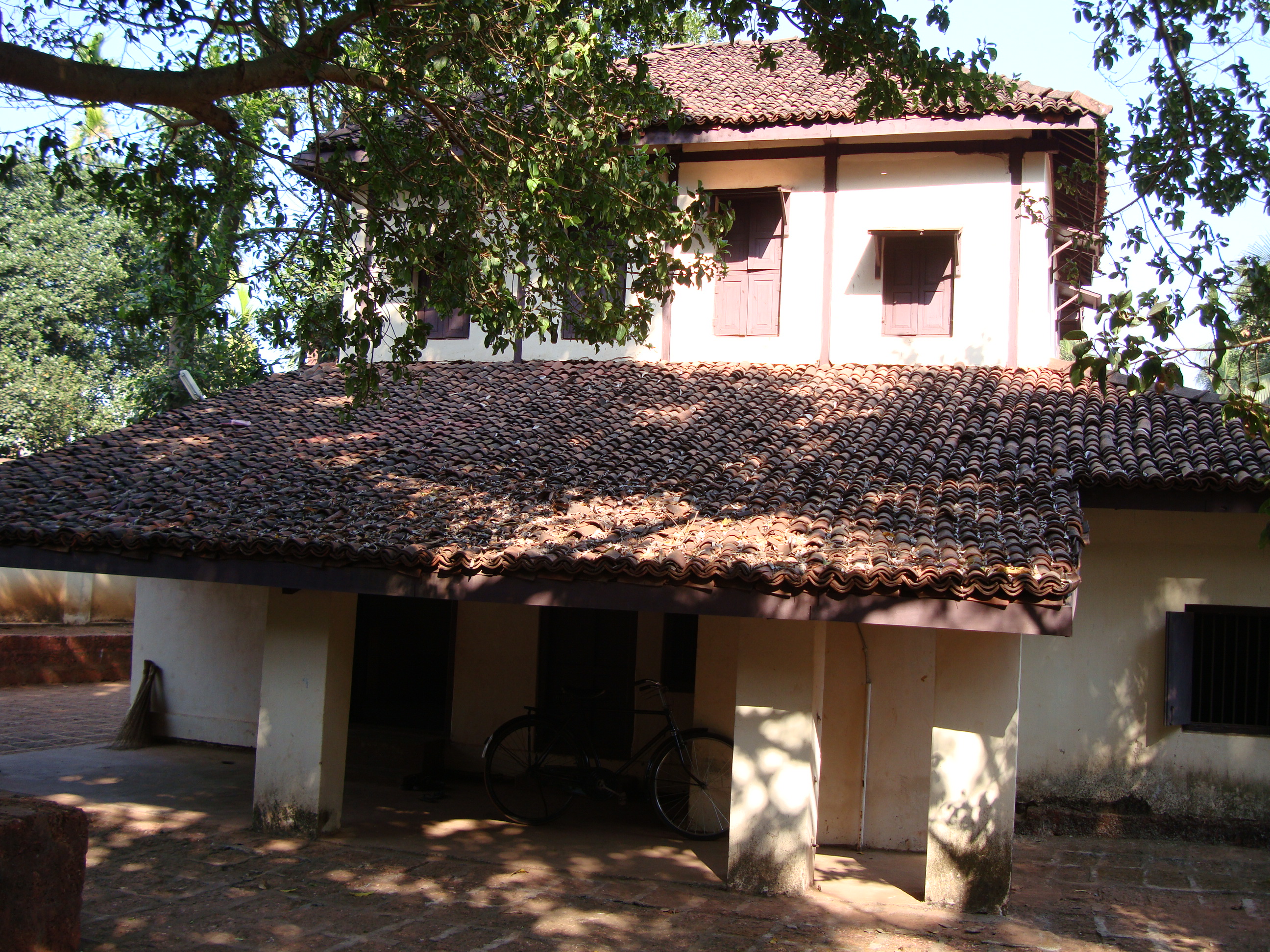
*Image credit: “House exterior view” by Viraat Kothare, showing the birthplace of Lokmanya Tilak, via Wikimedia Commons. Used unchanged under CC BY-SA 3.0. This contextual exterior photograph does not show the recommended products.*