
how_to
How to Help a Parent Get up from a Chair
Readers looking for How to Help a Parent Get up from a Chair usually need straightforward actions, not vague advice.
Helping a parent get up from a chair is a transfer, not a lift. The goal is to set up the chair, the floor, the person's body position, and your cues so your parent does as much of the movement as safely possible. Pulling from under the arms or hauling someone upward can injure both of you and can make your parent feel less steady.
Start with the ordinary chair your parent uses most: the recliner, dining chair, sofa spot, bedside chair, or favorite armchair. A safe technique only works if it fits that real setup.
Check Whether It Is Safe to Try
Do not try to stand your parent up if they have fallen, fainted, have new weakness on one side, chest pain, severe shortness of breath, a possible fracture, sudden confusion, or a new inability to bear weight. Call emergency services or the medical team instead. A chair transfer should not be used to push through a possible medical event.
Also pause if your parent cannot follow simple directions, is sliding forward uncontrollably, or needs you to hold most of their body weight. In those situations, the safer next step is usually physical therapy, occupational therapy, home health support, or a different transfer plan.
Set Up the Chair First
The best chair for standing has firm armrests, a stable seat, and a height that lets your parent's feet rest flat on the floor with knees bent. Very low sofas, deep recliners, rolling office chairs, and soft cushions make standing harder because the hips sink below the knees and there is nothing solid to push from.
Before helping, lock any wheelchair brakes, move footrests out of the way, and make sure the chair cannot slide. Clear throw rugs, cords, pet items, side tables, and clutter from the first few steps. Your parent should wear supportive shoes or non-skid slippers, not loose socks.
If the chair is too low, a firm seat cushion can help, but avoid stacks of pillows that shift. If the chair is deep, add a firm back cushion so your parent can sit closer to the front without slumping.
Use Clear Positioning Cues
Most chair transfers improve when the setup follows the same short sequence every time:
- Scoot forward until the hips are near the front third of the seat.
- Place both feet flat on the floor, slightly behind the knees.
- Keep feet about hip-width apart.
- Put hands on the chair arms or seat, not around your neck.
- Lean the chest forward over the toes.
- Push through the legs and hands to stand.
- Pause in standing before taking the first step.
The phrase "nose over toes" can help your parent lean forward enough to bring body weight over the feet. If they try to stand straight up from the back of the chair, the movement becomes much harder and they may fall backward into the seat.
Where the Caregiver Should Stand
Stand close, slightly to your parent's weaker side if one side is weaker, with your feet staggered and knees soft. Keep your back straight and avoid twisting. Your job is to guide and guard, not to pull them upright.
If you have been taught to use a gait belt, place it snugly around the waist over clothing and hold the belt from the sides or back. Do not use a gait belt if there are abdominal wounds, feeding tubes, rib injuries, or other medical reasons it may be unsafe unless a clinician has approved it.
Give one short cue at a time: "Scoot forward." "Feet back." "Lean forward." "Push up." Too much talking during the movement can make the transfer less coordinated.
The Stand-Up Sequence
Once the chair and body position are ready, count together: "One, two, three, stand." On the count of three, your parent pushes from the armrests while leaning forward and pressing through the legs. You can guide at the gait belt or trunk if trained, but avoid grabbing the arms or yanking the hands.
After standing, have your parent pause. Ask, "Do you feel steady?" Wait a few seconds before walking. Many falls happen because the person stands and immediately turns or reaches for a walker before balance has settled.
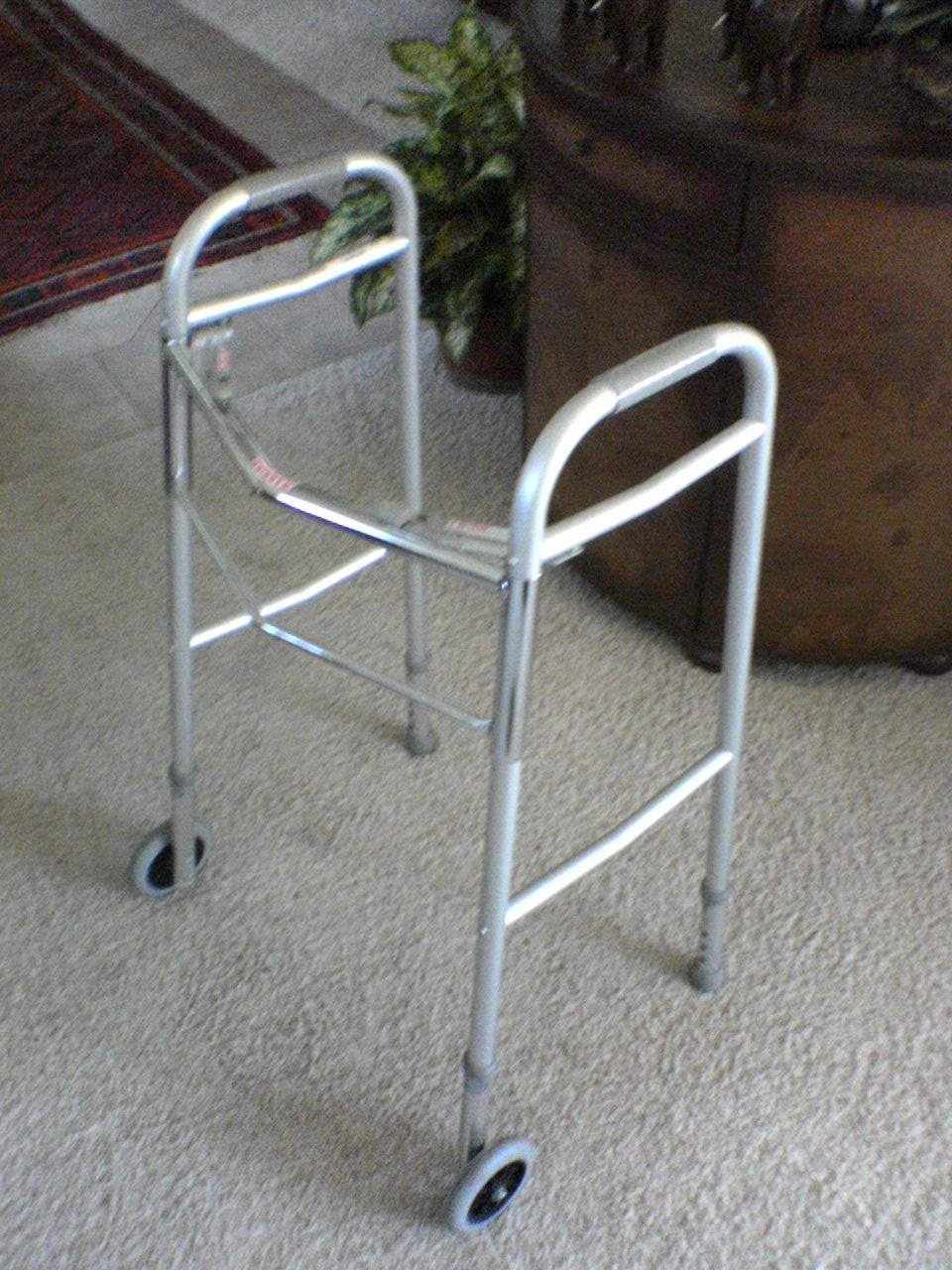
If your parent uses a walker, place it close enough to reach after standing but not so close that it blocks the feet. In most cases, they should push from the chair first, then move hands to the walker once upright. Pulling on a walker to stand can tip it backward unless a therapist has specifically trained a different method.
If They Cannot Stand on the First Try
Stop and reset instead of repeating the same failed attempt. Check whether the hips are too far back, the feet are too far forward, the chair is too low, pain is limiting effort, or your parent is tired. A small setup change can make the next attempt safer.
Try raising the seat with a firm cushion, moving to a chair with stronger arms, or asking your parent to rock gently once or twice before standing if their therapist has said that is appropriate. Do not keep trying until both of you are exhausted. Fatigue turns a manageable transfer into a fall risk.
If your parent routinely needs heavy help, ask for a therapy assessment. They may need strengthening exercises, transfer training, a different chair, a lift recliner, a sit-to-stand aid, or more hands-on support.
Make the Favorite Chair Safer
Families often focus on technique but leave the hardest chair unchanged. Look at the chair your parent uses for TV, meals, reading, and naps. If it is low, deep, unstable, or missing armrests, even perfect cueing may not be enough.
Helpful chair features include firm arms that extend far enough forward, a seat height that does not trap the hips low, a stable base, and upholstery that is not slippery. A lift chair can help some people, especially when weakness or arthritis makes standing painful, but it should still allow safe foot placement and a controlled pause in standing.
Avoid letting your parent sleep for long stretches in a recliner if standing from it is already difficult, unless the care team has recommended that setup. After hours in one position, stiffness, swelling, dizziness, and urgency to reach the bathroom can all make the first transfer riskier.
Practice the Sit-Down, Too
Standing up is only half the transfer. To sit safely, your parent should back up until they feel the chair behind both legs, reach back for the armrests, bend at the hips, and lower slowly. Sitting by dropping backward into the chair increases fall risk and can make the next stand harder because the body ends up too far back.
If a walker is used, keep it in front until your parent is lined up with the chair. They should not park the walker to the side and then twist toward the seat. With a rollator, lock the brakes before turning to sit.
When to Bring in Professional Help
Ask for physical or occupational therapy input if your parent has had a fall, has Parkinson's disease, stroke effects, dementia, severe arthritis, repeated dizziness, new pain, or rapidly declining strength. A therapist can watch the exact transfer, adjust the chair height, teach safer body mechanics, and recommend equipment that fits the home.
Medical review also matters if chair transfers suddenly get harder. New weakness, medication side effects, dehydration, infection, low blood pressure, pain, or fear after a fall can all show up first as "Mom cannot get out of the chair anymore."
Common Mistakes to Avoid
The biggest mistake is pulling on your parent's arms. Shoulders are easy to injure, and pulling often causes the person to lean backward instead of forward. Another mistake is letting your parent hold onto your neck, which can pull you off balance and strain your back.
Do not rush because the phone is ringing, dinner is ready, or the bathroom feels urgent. Clear the path, give the same cues, and pause after standing. A slow transfer that works is faster than a rushed transfer followed by a fall.
Finally, do not treat repeated difficulty as stubbornness. If your parent avoids a chair, refuses to stand, or asks for more help than usual, look for pain, fear, fatigue, poor chair fit, medication timing, or a need for therapy.
A Simple Home Checklist
Before the next few transfers, confirm:
- The chair has firm arms and does not slide.
- The seat is high and firm enough for your parent.
- Feet can rest flat and slightly behind the knees.
- The walking path is clear and well lit.
- Shoes or slippers grip the floor.
- The walker or cane is nearby but not blocking the stand.
- You use short, consistent cues.
- Your parent pauses before walking.
- You stop if the transfer requires heavy lifting.
What Success Looks Like
A better chair transfer should feel calmer within a few days. Your parent knows where to put their feet and hands, you know where to stand, and the chair itself is no longer working against the movement. The goal is not to make every stand effortless. It is to reduce pulling, rushing, fear, and near misses while preserving as much independence as possible.
If the routine still feels unsafe after setup changes and practice, treat that as useful information. The answer may be a different chair, therapy, a mobility device review, paid help at key times of day, or a medical check. Getting up from a chair is a small daily act, but it often reveals exactly where a home support plan needs to improve.