
compare
Cane vs Walker
Readers comparing Cane vs Walker need clearer tradeoffs, not generic feature lists.
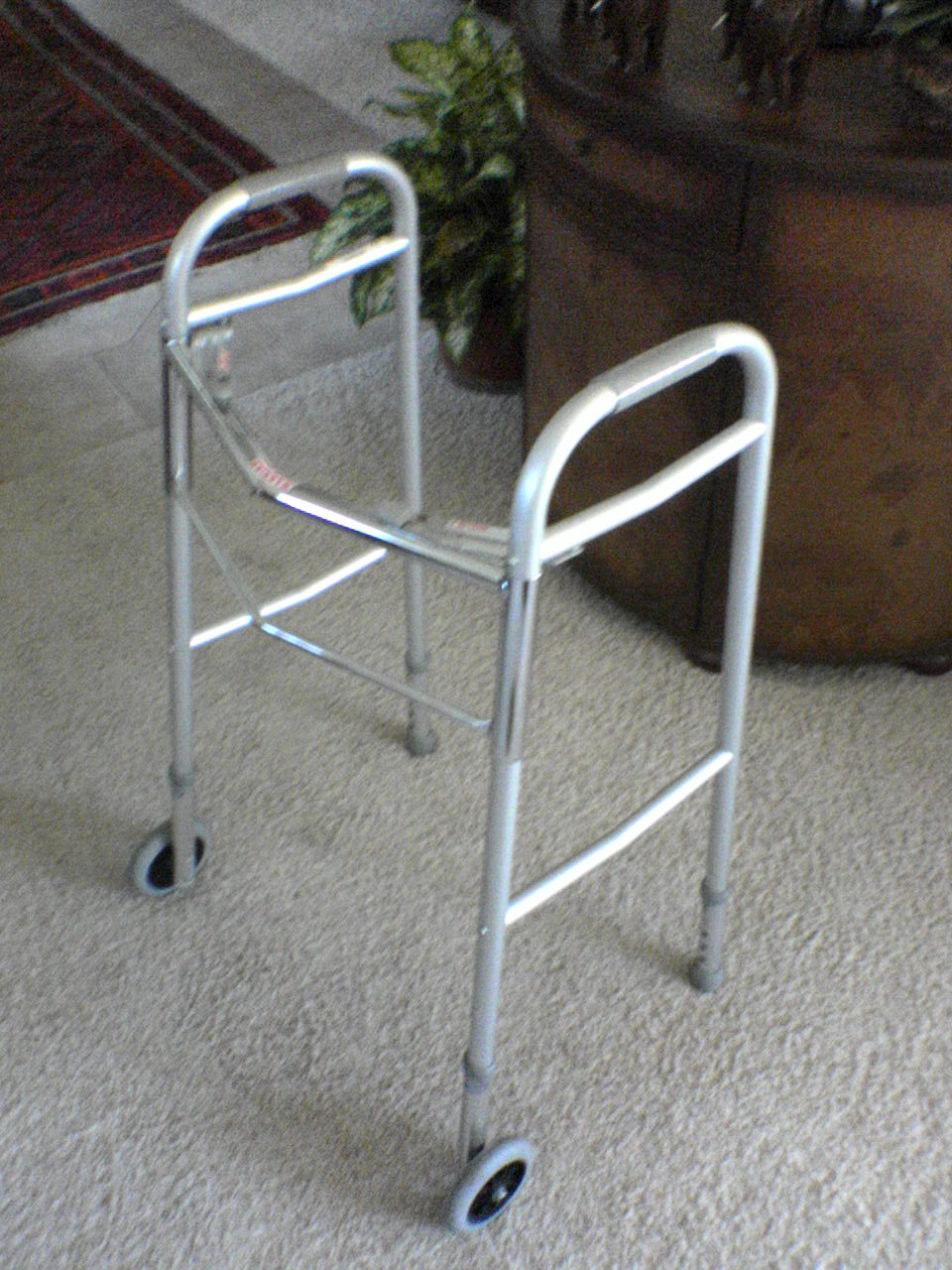
Choosing between a cane and a walker starts with how much support your parent needs while moving. A cane may suit someone who needs modest help on one side. A walker offers a wider support area and may be more appropriate when balance is poorer or both legs need help. These are starting points for a mobility assessment, rather than a way to prescribe equipment from a description. American Family Physician explains these differences.
For a family, the practical question is specific: which device can your parent use correctly on the route from their favorite chair to the bathroom, through the kitchen, and out to appointments? This comparison helps you prepare for that decision with a physical therapist and check whether the recommended equipment fits everyday life.
Cane vs walker at a glance
| Decision | Cane | Walker | | --- | --- | --- | | Support pattern | One-handed aid for a person who retains enough balance | Two-handed frame for a person needing a broader base | | Space at home | Smaller footprint around furniture | Requires clearance for the whole frame and turns | | Hand demands | Grip and coordination in the hand using it | Usually requires both hands; lifting or braking demands depend on type | | Carrying belongings | One hand remains available, but carrying can affect walking | A compatible pouch may help keep hands on the grips | | Transport | Usually simpler to store in a car | Check folding, weight, and boot or trunk space | | Stairs | May be used with a rail after instruction | Requires a separate access plan; do not take a walker up a staircase | | Main question for the therapist | Is one-sided support sufficient? | Which frame and wheel arrangement can this person control? |
The support and control distinctions above follow American Family Physician's clinical review. Space and transport considerations are practical checks families can make alongside the assessment.
Describe the walking problem before shopping
Bring concrete observations to the appointment. “She seems unsteady” gives the clinician less information than “She reaches for the doorframe when turning into the bathroom.” Write down where the problem happens, what the person is doing, and whether it occurs at a particular time of day. Do not ask someone to repeat an unsafe movement for a video.
Useful observations include:
- Whether your parent reaches for furniture despite already having a cane.
- Which part of the route causes hesitation, such as a doorway or chair approach.
- Whether they leave their device behind when the telephone rings.
- Whether a hand becomes uncomfortable during an ordinary trip across the room.
- Whether the equipment fits alongside the bed and through the bathroom entrance.
Keep observations separate from your conclusions. “Dad caught the cane base on the rug twice” is useful. “Dad needs a bigger cane” assumes the solution before anyone has checked his walking. Bring the current device too, including its usual attachments, so the therapist can see what your parent actually uses.
When a cane may be a reasonable option
A cane is worth discussing when a person needs limited support and can coordinate a one-handed aid. It is less stable than a walker and requires adequate balance, hand control, and upper-body strength. A quad cane has a broader base than a single-tip cane, but it does not automatically replace the support of a walker. The clinical review in American Family Physician describes these selection factors.
Consider an illustrative situation: your mother has been assessed and taught to use a cane for a painful leg. At home, she can follow the taught sequence, turn toward her chair, and keep the cane beside her. Your follow-up questions might focus on comfortable grip shape and where to store it within reach.
Now change one detail: she sets the cane down in the kitchen and continues by holding the counter. That observation deserves a discussion about why. Is the cane awkward to place, is the route cluttered, or is its support insufficient? Buying another handle style without asking may miss the underlying difficulty.
Appearance and convenience matter to the person using the aid. Ask which features they find acceptable, and bring those preferences to the fitting. A preferred color or easy storage can make the recommendation more workable, provided the device still meets the assessed need.
When a walker deserves assessment
A walker may be considered when a cane does not provide enough support, including some cases of poor balance or weakness affecting both legs. However, a person must also be able to manage the particular walker. Someone unable to walk safely with available aids may need another mobility plan, including assessment for a wheelchair. American Family Physician discusses these options.
For the family, the next step is to describe what the cane fails to help with. Perhaps your father manages the straight hallway but repeatedly needs someone beside him at the bathroom turn. Ask the therapist to address that exact task and explain what equipment and assistance it requires.
Avoid treating a successful demonstration across a showroom as the whole answer. Ask how to check the recommended device in the spaces your parent actually uses. If the bathroom entrance is difficult, bring measurements and photographs of the layout without asking your parent to squeeze through for a demonstration.
A larger device also changes family logistics. Who will put it in the car? Where will it stand during a meal? Can it remain accessible without blocking another person's route? Resolving those details makes it easier to follow the clinical recommendation consistently.
Standard walker, two-wheel walker, or rollator?
“Walker” describes several different devices. A standard walker has four rubber-tipped legs and must be lifted to advance. A two-wheel walker has front wheels and may be easier for someone who struggles to lift a frame. A four-wheel rollator moves differently and requires brake control. These designs should not be treated as interchangeable. Mayo Clinic describes walker types and their uses.
When trying a recommended model, ask the supplier to demonstrate its specific controls and folding mechanism. Have the therapist confirm that your parent can manage the required actions. A model that folds conveniently for you may still be awkward for the person who must use it several times an hour.
A rollator's seat can attract families who want somewhere to rest during outings. Before choosing it, ask whether the person's walking and braking abilities match that design. Ask where it can be parked for a rest and how the user should approach and leave the seat. Follow the device's instructions; do not assume an ordinary rollator is intended to transport a seated person.
If your parent has been given restrictions on putting weight through a leg, take the written instructions to the therapist. Ask them to identify suitable equipment and teach the required technique. A purchase described simply as a “walking aid” does not establish that it can meet those restrictions.
Fit and training affect the comparison
For both a cane and a conventional walker, handle height commonly starts around the wrist crease when standing upright, with a slight elbow bend while gripping. For a painful or weak leg, cane instruction usually places it in the opposite hand. A clinician should adapt the technique to the individual's needs. AAOS provides fitting and use guidance.
Bring the shoes your parent normally wears. Ask for a demonstration, then have your parent show the technique back to the therapist. A caregiver should also explain what they understood, especially if they will provide reminders at home. Request written instructions for any restrictions or assistance requirements.
Ask about the activities between stretches of walking: getting out of a chair, opening a door, approaching the toilet, and sitting at a table. AAOS advises pushing up from the chair rather than pulling on a walker to stand. Its walking-aid guide also covers transfers.
Do not change several settings at once after a difficult first day. Record what felt awkward and contact the fitting professional. That gives them a chance to distinguish a height problem from a training issue or a device that does not meet the person's needs.
Check the home route before the equipment arrives
Measure the narrowest usable doorway opening, allowing for the door itself and protruding furniture. Record tight corners and the space around the toilet. Compare these measurements with the actual model's dimensions, then ask whether there is enough room to maneuver. Passing through an opening and turning beyond it are different tasks.
Make a short route inventory:
1. **Bed to bathroom:** Where will the device wait, and can the person reach it as instructed? 2. **Chair to kitchen:** Where do furniture, pet bowls, or cables interrupt the route? 3. **Dining table:** Where can the aid remain accessible while someone eats? 4. **Front door to vehicle:** Which thresholds or changes in level need a specific plan? 5. **Storage:** Where will folding equipment stand without creating an obstacle?
This inventory is a planning tool for the family and therapist. It should not become a home obstacle course. Arrange any supervised practice according to the clinician's instructions.
If a walker will not fit, bring the layout back to the occupational therapist or physical therapist. Ask about furniture changes, an alternative route, or a different assessed device. Choosing a cane solely because the hallway is narrow leaves the support question unanswered.
For stairs, get an explicit access plan. AAOS says not to use a walker on stairs or escalators. Its guidance distinguishes stair use from ordinary walking. Discuss entrances, upstairs bedrooms, and appointment locations before bringing equipment home.
Compare the full cost and daily workload
Ask for a written quote for the specific recommended model. Include fitting, delivery, replacement tips or wheels, and any approved accessories. Confirm the return policy and what happens if the device cannot be adjusted adequately. A low advertised price is less useful if the equipment cannot be returned after an unsuitable fit.
If using insurance or a local equipment program, ask the plan or supplier about eligibility, prescriptions, participating providers, and your expected payment before purchasing. Coverage rules depend on the program and location. Keep the model number and paperwork together so the family can order the correct replacement parts later.
Divide responsibilities clearly. One relative might arrange the fitting; another might handle transport; your parent may prefer to choose among clinically suitable grips. Agree who will contact the supplier if a part becomes loose. Avoid buying several different aids as surprises: each purchase creates another fitting and training question.
For a borrowed device, ask the clinician or supplier to inspect suitability, adjustment range, condition, and weight capacity. A relative's walker may be available immediately, but availability alone does not show that it fits your parent's body or walking needs.
Plan a follow-up instead of assuming the choice is permanent
Agree on a review point with the therapist. Record specific experiences: “Could not manage the bathroom turn,” “left the cane beside the sofa,” or “needed a reminder at every doorway.” These notes are more actionable than a general verdict that the equipment is good or bad.
Ask your parent what they find hardest. They may describe a grip that hurts, embarrassment during outings, or nowhere convenient to put the aid at meals. Practical problems deserve practical solutions, and a clinician can help distinguish them from a need to change devices.
If recovery leads your parent to ask about moving from a walker to a cane, request reassessment. Ask which activities they should demonstrate and what support they should continue using until reviewed. Convenience when packing the car is not a measure of readiness.
Useful appointment questions include:
- Which support need led you to recommend this device?
- Can you show us the technique for our difficult doorway or transfer?
- What assistance should a caregiver provide, and what training do we need?
- Which accessories are compatible with this model?
- What changes should prompt us to contact you before the planned review?
A successful choice gives your parent a usable way to complete meaningful daily activities. Let the assessment establish the support required, then make the home layout, equipment handling, and family routine work around that recommendation.
Image credit
Featured photograph: High Plains Drifter, public domain, via Wikimedia Commons. It shows a walking frame, not every device discussed here.