
best
Best Stove Safety Devices
Families comparing Stove Safety Devices need a tighter shortlist, simpler criteria, and buying guidance rooted in real home use.
The best stove safety devices for seniors address the mistake that is actually happening in the kitchen. **CookStop** is worth investigating for unattended electric cooking, **iGuard's electric plug-in model** for presence-based shutoff with optional connected controls, and **FireAvert** for shutoff triggered by the sound of a smoke alarm. These systems respond to different events, so they are not interchangeable.
If a parent repeatedly leaves a burner on, begin by comparing automatic shutoff approaches and checking the exact stove connection. If the problem is turning the stove on when cooking should be supervised, access controls and a supported meal routine may matter more than another alarm. A product cannot determine whether someone can safely cook alone.
This guide uses manufacturer information and public safety guidance checked September 25, 2026. We have not tested these devices in a kitchen or independently verified manufacturers' fire-prevention claims. The recommendations describe candidates for particular needs, rather than proven rankings of safety performance. Prices are published snapshots; unresolved listing details are identified below.
Shortlist: choose the trigger before the brand
| Candidate | Situation to investigate | What prompts intervention | Purchase detail to resolve | | --- | --- | --- | --- | | CookStop electric stove kits | A person leaves an electric stove unattended | The manufacturer's system turns the stove off after an unattended interval | Match plug-in or direct-wire hardware; request a current quote | | iGuard electric plug-in model | Unattended cooking where the family also wants to explore connected controls | Detection that the cooking area is unattended | Confirm product generation, shipping availability, price, and supported features | | FireAvert Auto Stove Shutoff | An additional response when a compatible smoke alarm sounds | Recognition of the smoke alarm, followed by a delay before shutoff | Choose the correct electric or gas variant and confirm alarm compatibility |
Treat each candidate as part of an appliance-specific installation. An electric range with a cord, a built-in hardwired cooktop, and a gas stove require different hardware. A familiar brand name or a product picture does not establish that the device in a shopping cart matches the appliance in the home.
The U.S. Fire Administration advises turning the burner off when leaving the kitchen and keeping watch over cooking. An automatic device provides a backup to appropriate cooking habits; it should not become permission to leave a pan heating unattended. USFA cooking fire safety guidance.
CookStop: investigate for unattended electric cooking
CookStop describes automatic shutoff when an electric stove has been unattended for a specified period. Its catalog lists three-wire and four-wire plug-in kits, a direct-wire kit for built-in cooktops, and other installation variants. The kits combine a monitoring controller with a power-control component. CookStop overview and manufacturer product catalog.
Our reason to shortlist it is the focus on the unattended-cooking scenario. If the family’s concern is “Dad starts a pan, walks away, and forgets it,” this is the type of trigger to investigate before choosing a system that waits for an alarm. That is a fit judgment, not a guarantee that the device will intervene before any hazardous condition develops.
Ask the supplier to explain how the current controller determines attendance and how the setting behaves in your kitchen. Useful questions include whether movement beyond the cooking area affects it, how a seated cook is detected, what warnings occur, and what someone must do after a shutoff. Request answers for the exact kit being quoted.
The layout discussion is especially important in an open-plan home. A sensor may have a view of people who are nearby but not watching the pan. Conversely, someone preparing food from a seated position may move differently from the person shown in a demonstration. Have the installer or supplier explain how the proposed positioning deals with those situations.
CookStop's catalog distinguishes corded options for unusual outlet locations from its ordinary plug-in kits. That makes physical clearance another reason to identify the connection before ordering. Do not choose a kit by the age of the house; renovations and appliance changes can make that a poor proxy for the actual wiring. CookStop kit descriptions.
We could verify the manufacturer’s catalog but could not retrieve a reliable current checkout price from its linked shop. Request a dated quote covering the complete kit, shipping, and any installation accessories. If a seller has older stock, confirm that support, instructions, and replacement components are available for that specific version before paying.
iGuard: investigate the electric model and its current generation
The current iGuard electric plug-in listing describes unattended-cooking detection, a warning before shutoff, an extended cooking timer, and core forgotten-cooking protection that works without Wi-Fi. It also advertises app features, including remote shutoff where supported. These are manufacturer descriptions; confirm the exact features of the unit being supplied. iGuard electric model listing.
This candidate merits a conversation when the family wants automatic intervention and is also interested in managing settings or reviewing activity remotely. Begin with the local behavior, however. The most useful app cannot compensate for a controller that confuses the person preparing dinner or does not fit the household's cooking routine.
The listing contained inconsistent price text when checked: repeated **$549** purchase buttons and a separate **$699 total** line. It also showed different availability messaging for plug variants. Treat the cost and shipment date as unconfirmed until the supplier gives a written total, currency, exact model, and dispatch estimate. Do not plan a necessary safety change around an ambiguous delivery promise. Current ordering page.
Product generation needs similar attention. A manufacturer may retain manuals for an older device while advertising a newer controller. Ask for the manual that matches the supplied unit and confirm the control panel, sensing method, and reset sequence. A demonstration video for a different generation is not enough to plan daily use.
For a family considering an extended cooking mode, ask who can enable it, how long it lasts, and what protection remains while it is active. Write down a real meal such as a long simmer or oven roast and ask the supplier to explain that sequence. Avoid assuming that a special mode leaves every automatic safeguard unchanged.
The manufacturer's shop separately listed gas and electric cooktop products as out of stock at the time of review. Their existence in the catalog does not establish immediate availability or compatibility with the new electric plug-in product's features. Families needing those versions should obtain a specific supply and installation plan. iGuard shop.
FireAvert: investigate for smoke-alarm-triggered shutoff
FireAvert's Auto Stove Shutoff listens for a smoke alarm and then interrupts the stove's energy supply if the alarm continues. The product page describes a 30-second delay and lists electric three-prong, electric four-prong, and gas variants at **US$249.99**. The page also displayed sold-out language alongside ordering controls, so verify the selected variant's stock before relying on delivery. FireAvert product information.
Our reason to include this system is its different trigger. A smoke-alarm response may be useful as another layer when cooking has begun producing enough smoke to activate the alarm. It does not establish that the stove will turn off simply because a person leaves the room, and it is not evidence that all dangerous situations will be detected before ignition.
Alarm compatibility deserves a direct check. FireAvert's support page describes compatibility with modern residential smoke detectors using a frequency around 3.2 kHz. Do not infer that every sounder, voice alert, low-frequency alarm, or building alarm system will work simply because a sales headline says “any smoke alarm.” Give support the actual alarm model and follow the approved pairing and test procedure. FireAvert support.
Separate the basic shutoff purchase from monitoring services. FireAvert advertises text alerts and dashboard functions with monitoring, but its catalog displayed several plan names and different annual prices. Ask which hardware, gateway, connectivity, and subscription are needed for the features in your quote. A visible device price does not establish the recurring cost of remote notifications. FireAvert product and plan catalog.
For a gas stove, verify that the proposed variant includes the appropriate gas shutoff arrangement. An electrical interruption alone must not be assumed to stop gas flow. Arrange installation with a qualified gas professional and ask for the manufacturer-approved restart demonstration; this guide does not provide gas-fitting instructions.
A remote alert also needs a response plan. If an adult child receives a notification while away, who can determine what is happening in the kitchen? Do not remotely restore cooking power after an unexplained shutdown without establishing that the scene is safe and following the device instructions. Convenience should not bypass checking the reason for the event.
Match the device to the observed problem
Write one factual sentence about the last incident. “The saucepan was left heating when she went to answer the door” suggests a different purchase discussion from “he turns the knobs while wiping the control panel.” Avoid shopping from a broad label such as age, forgetfulness, or dementia without describing the task that needs support.
For leaving the room, compare unattended-cooking systems and their sensing limitations. For accidental activation, investigate appliance-compatible control locks or knob covers. For smoke events, review smoke alarms and an alarm-responsive shutoff. For reaching across hot cookware, changing the setup and assisting with the task may address the problem more directly than a remote notification.
There may be more than one issue, but resist collecting products without assigning each a purpose. A timer reminds a person to act; an automatic shutoff performs an action under defined conditions; a cover limits access to a control. List what each proposed purchase will do and what it will leave unresolved.
If the parent cannot understand an alarm, handle a hot pan safely, or respond appropriately when the stove stops, a device alone is not a sufficient plan. Arrange supervised meal preparation while discussing the person's abilities with a clinician or occupational therapist. The aim is a workable meal routine, not merely an appliance that can be switched off.
Check compatibility before moving the stove
Gather the appliance brand, model number, fuel type, and whether it is freestanding or built in. Use the appliance documentation and accessible identification label. Have an installer verify the connection and electrical rating when access is difficult. Do not ask an older adult to drag a heavy range out to photograph the outlet.
For electric equipment, the supplier needs more than a picture of the front controls. Confirm the plug configuration or hardwired connection, supply requirements, load rating, and space available for the shutoff hardware. A device sold for a small countertop appliance is not automatically suitable for a full-size range. Use only an arrangement approved for the appliance and shutoff system.
For gas or dual-fuel equipment, identify what powers each part of the appliance. Ask explicitly whether the installation controls the burners, the oven, or both. A combined electric-and-gas appliance can make a generic “works with stoves” answer inadequate. Obtain a written compatibility statement rather than improvising adapters or combining unrelated components.
Also check the physical installation. The range should return to its proper position, with required clearances and any anti-tip arrangement restored according to its instructions. Hardware behind the appliance must not be forced into a space where it prevents proper placement. Let the installer resolve a fit problem before the unit is put back into daily service.
Evaluate controls with the person who cooks
The control sequence should be understandable during an ordinary meal, when someone is hungry or distracted. Ask for a demonstration of starting cooking, receiving a warning, completing a shutoff, and returning to normal use. A display that makes sense to the family member installing it may still be difficult for the parent.
Pay attention to hearing, vision, reach, and hand function. Can the cook notice the warning from the position where they usually prepare food? Can they read the screen without leaning over the stove? Can they operate the required button without confusion? These questions do not require a diagnosis; they require watching the actual interaction.
Settings should also reflect shared use. In a home with several cooks, one person's extended cooking preference may affect another person's routine. Decide who may change settings, explain the reason for restrictions, and keep a simple record of the agreed configuration. Repeatedly changing the timer without telling others can make behavior seem unpredictable.
A device that is frequently bypassed has become a cue to reassess the setup. Ask whether nuisance shutoffs, poor sensor placement, confusing instructions, or the cooking task itself is causing the difficulty. Do not solve every interruption by lengthening delays or disabling functions; consult the manufacturer and revisit whether the system suits the household.
Knob covers, timers, and smart plugs have different jobs
A knob cover may help limit accidental or unwanted operation when it fits the appliance and the intended user cannot readily defeat it. It does not monitor a pan or extinguish a flame. A cover that prevents a caregiver from quickly operating the control can also create a usability problem. Check fit and access with the appliance off.
An ordinary kitchen timer can support someone who reliably hears it, understands it, and acts on it. It does not disconnect power simply because it rings. If the recent problem was ignoring or forgetting alarms, buying a louder timer may leave the central difficulty unresolved. Observe whether a reminder changes the routine before relying on it.
Do not substitute an ordinary household smart plug for a range-rated safety system. Ask the appliance maker or qualified installer about any proposed switching equipment, including its electrical rating and restart behavior. A shopping listing that mentions “smart home” or “remote control” does not establish suitability for a cooker.
Built-in appliance locks should be checked against the manual. A control lock may limit certain inputs without performing every function a family expects. Ask what happens to an already running burner or oven, what resets the lock, and whether it returns after a power interruption. The label alone cannot answer those questions.
Memory loss changes the buying decision
The Alzheimer's Association recommends considering automatic-shutoff appliances and measures that prevent unsafe stove use, while adapting the home as a person's abilities change. That guidance supports a broader assessment; it does not certify any specific aftermarket device as sufficient for independent cooking. Alzheimer's Association home safety guidance.
Include the person in deciding how meals will work. They may still enjoy choosing ingredients, assembling a cold lunch, or helping prepare dinner with someone nearby. Preserve meaningful participation while arranging help with the parts that have become unreliable. Present the equipment as one practical adjustment, without promising that it resolves every concern.
When there have been repeated near misses, make an interim meal plan while equipment is being ordered. Schedule shared cooking, arrange prepared meals, or use other methods that have been assessed as suitable for that person. Changing to a different appliance is not automatically safer if its controls or operating sequence are unfamiliar.
Set a review point after installation and after any new incident. Note whether the person eats regularly, understands the controls, and accepts the arrangement. A successful shutoff is useful information about an event; repeated shutoffs may also show that the household needs more support than the original purchase plan anticipated.
Compare total ownership costs
Request a quote for the complete functioning setup. It should identify the device model, connection hardware, installation, shipping, tax, and any required monitoring subscription. If an installer must return because the selected connector is wrong, a low device price may produce an expensive project. Confirm the appliance details before placing the order.
Ask what the product does without a paid plan, without internet access, and after a power failure. Get these answers separately. Local shutoff and remote notification are different functions, and one continuing to work does not prove that the other does. Record who will notice a failed notification service or an expired subscription.
A planning example illustrates the distinction: a hypothetical $250 device with $150 installation and a $100 annual service would cost $500 in its first year before tax and shipping. This is not a quote for a shortlisted product. Use the supplier's confirmed figures and compare several years if ongoing monitoring is part of the decision.
Check return terms before installation, particularly for opened electrical equipment or gas components. Ask how an incompatible alarm, an unsuitable kitchen layout, or a delayed shipment will be handled. Keep the written quote, matching manual, receipt, and supplier's compatibility response together so another caregiver can find them.
Installation handover and ongoing checks
Have the installer demonstrate the manufacturer-approved functional test and explain what a successful result looks like. Never create smoke, overheat oil, or leave a gas burner unlit to test a safety device. A controlled test procedure should come from the exact product's instructions, not an improvised scenario copied from a video.
At handover, document the settings and the restart process. Confirm who can restore service, what checks are required first, and what happens if the parent cannot complete the sequence. Test any promised notifications using the approved method and ensure the designated recipient actually receives them on the intended phone.
Continue maintaining smoke and carbon monoxide alarms according to their instructions. A stove shutoff is not a replacement for those alarms, and a connected dashboard does not establish that they are working. Review the system after an appliance replacement, alarm replacement, kitchen rearrangement, or change in internet equipment.
If a shutoff occurs during real cooking, establish why before resuming. Keep a brief record of the meal, warning, response, and any fault indication. That makes a support call more useful and helps distinguish a configuration problem from a cooking routine that now needs supervision.
Common buying questions
Is there one best device for every older adult?
No. Start with the observed event, then rule out incompatible hardware. CookStop and iGuard are candidates for unattended-cooking intervention; FireAvert addresses a smoke-alarm event. None of those descriptions proves suitability for every kitchen or user. Ask for a demonstration and written compatibility confirmation before committing.
Does automatic shutoff make the stove cool immediately?
No. Cookware and cooking surfaces can remain hot after energy is disconnected. The household still needs a plan for hot pans and for recognizing when cooking has stopped. Avoid treating a shutdown notification as confirmation that the kitchen can be approached without caution.
Can I restore the stove from my phone?
Some systems advertise remote controls, but capability depends on the model and service. More importantly, an unexplained shutdown needs assessment at the home. Do not reenergize a potentially hazardous appliance merely to clear an alert or help someone finish dinner faster.
What is the best next step before purchase?
Record the stove model and the specific recent problem, then request a complete proposal for a compatible device. Ask about the trigger, reset, outage behavior, installation, recurring costs, and delivery. If cooking is already unsafe without help, arrange that help now while the equipment decision is being made.
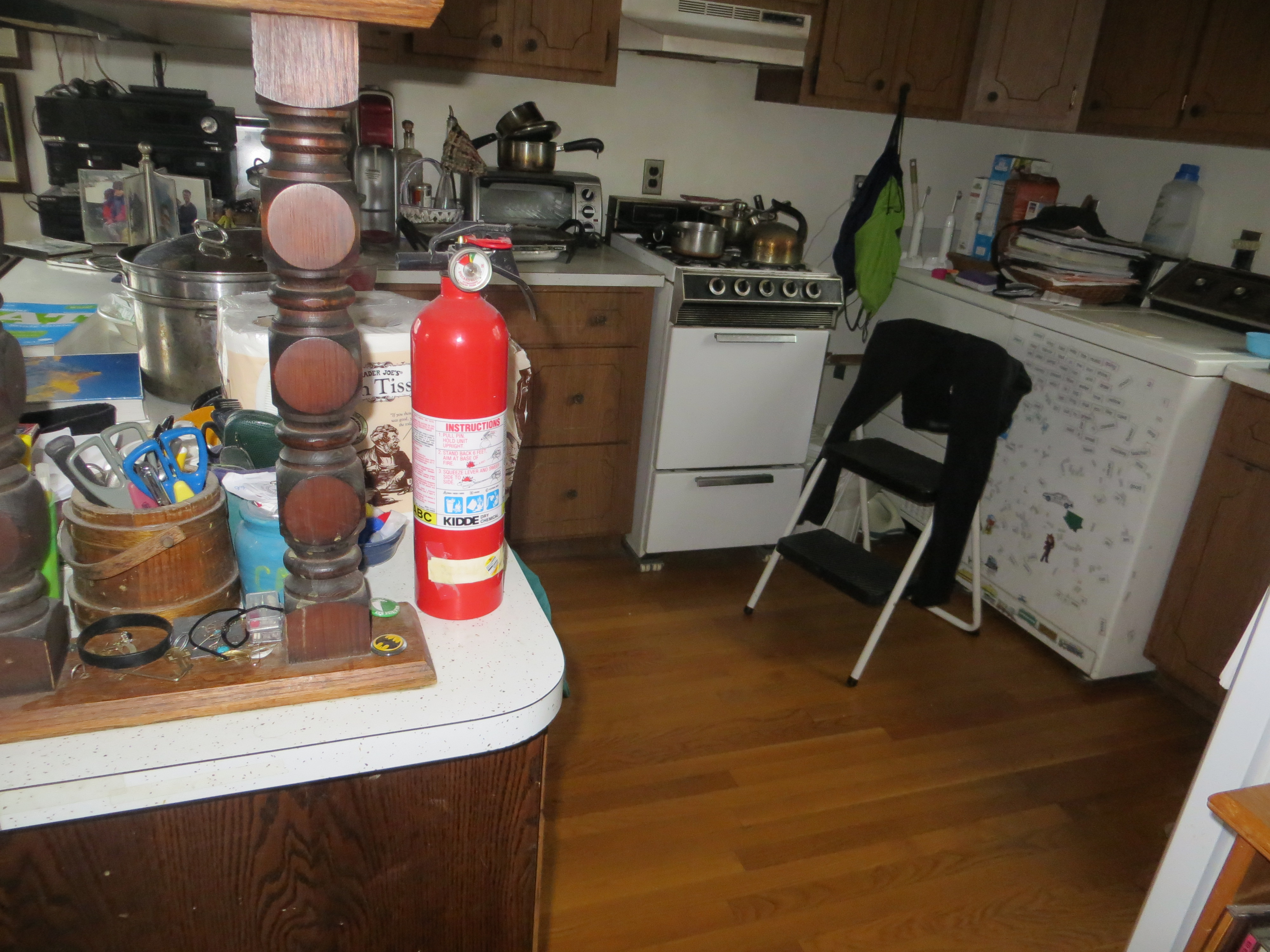
Featured image: Kitchen Fire Extinguisher by CraigKelley62, via Wikimedia Commons, used unchanged under CC BY-SA 4.0. The photograph illustrates kitchen safety equipment, not a reviewed stove shutoff device.